
Fall Focus
Community Impacts and Funding Opportunities
Lotus News
Accelerating Climate Action in Mountain, Resort and Rural Communities at MT2030 Climate Summit
This month, Lotus attended the Mountain Towns 2030 Climate Summit in Sun Valley, Idaho, as a Trusted Partner and sponsor. The summit brought together over 500 leaders representing over 80 mountain communities and 40 ski resorts to share experiences, learn from peers, and advance practical climate solutions.
Lotus presented on three projects supporting communities in turning climate goals into action. The first highlighted McCall, Idaho’s award-winning Rooted in Resilience Climate Action Plan. The second showcased the City of Denver’s Emissions Modeling and Dashboards. The third explored how small Colorado mountain communities are advancing all-electric construction through building energy codes and electrification incentives.
The summit reinforced the importance of local leadership, tailored community engagement, and sharing practical solutions that can be adapted to different communities. Sessions highlighted the need to move from planning to implementation, demonstrate the tangible benefits of climate investments, and help communities accelerate progress by learning from one another.
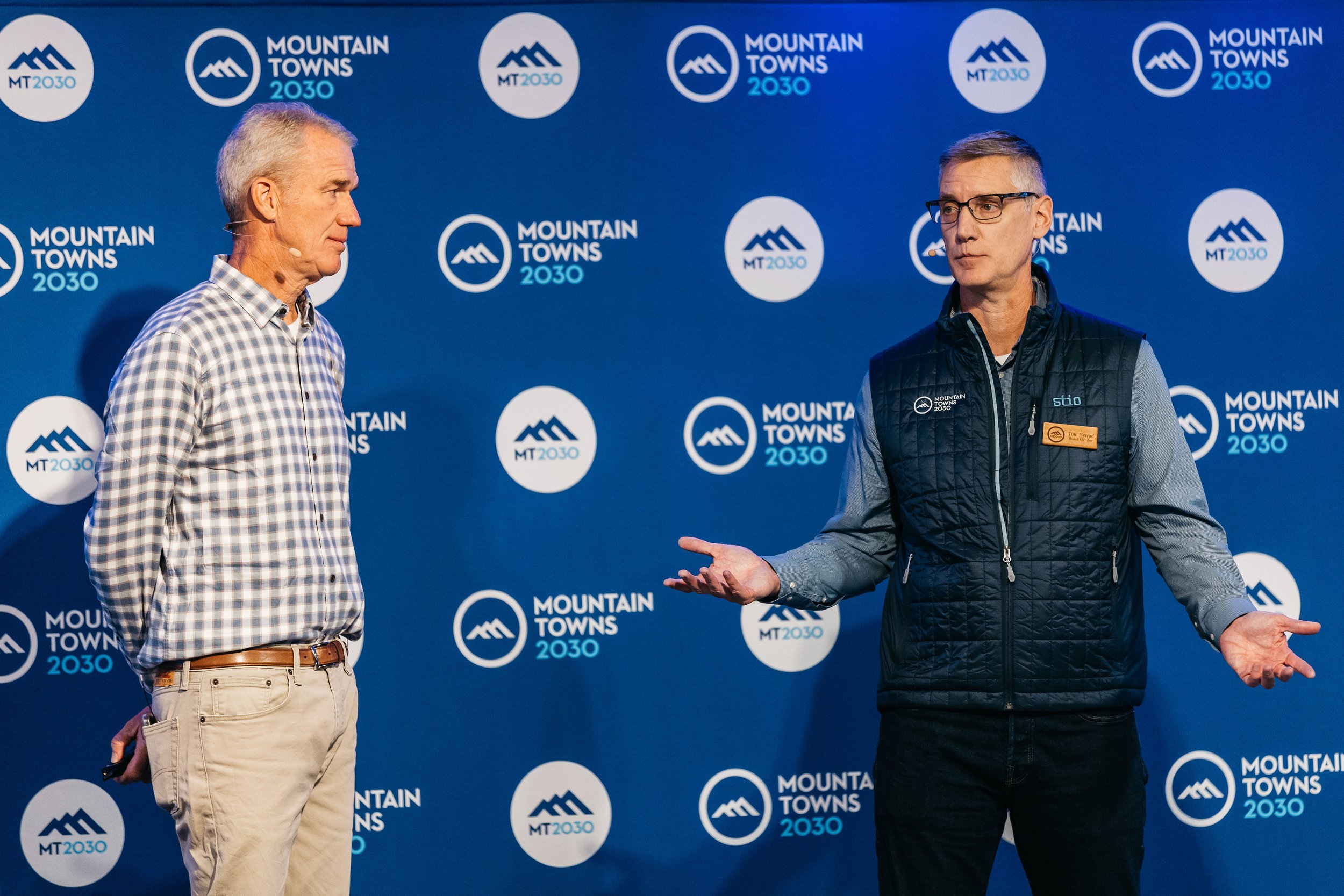
Photo courtesy of Mountain Towns 2030. Pictured above, Chris Steinkamp, MT2030 Executive Director, and Tom Herrod, MT2030 Board Member and Lotus Managing Director, discuss the Trusted Partner Program and Anchor Communities.
Lotus Co-Develops Land Use Impact Calculator for Colorado Communities
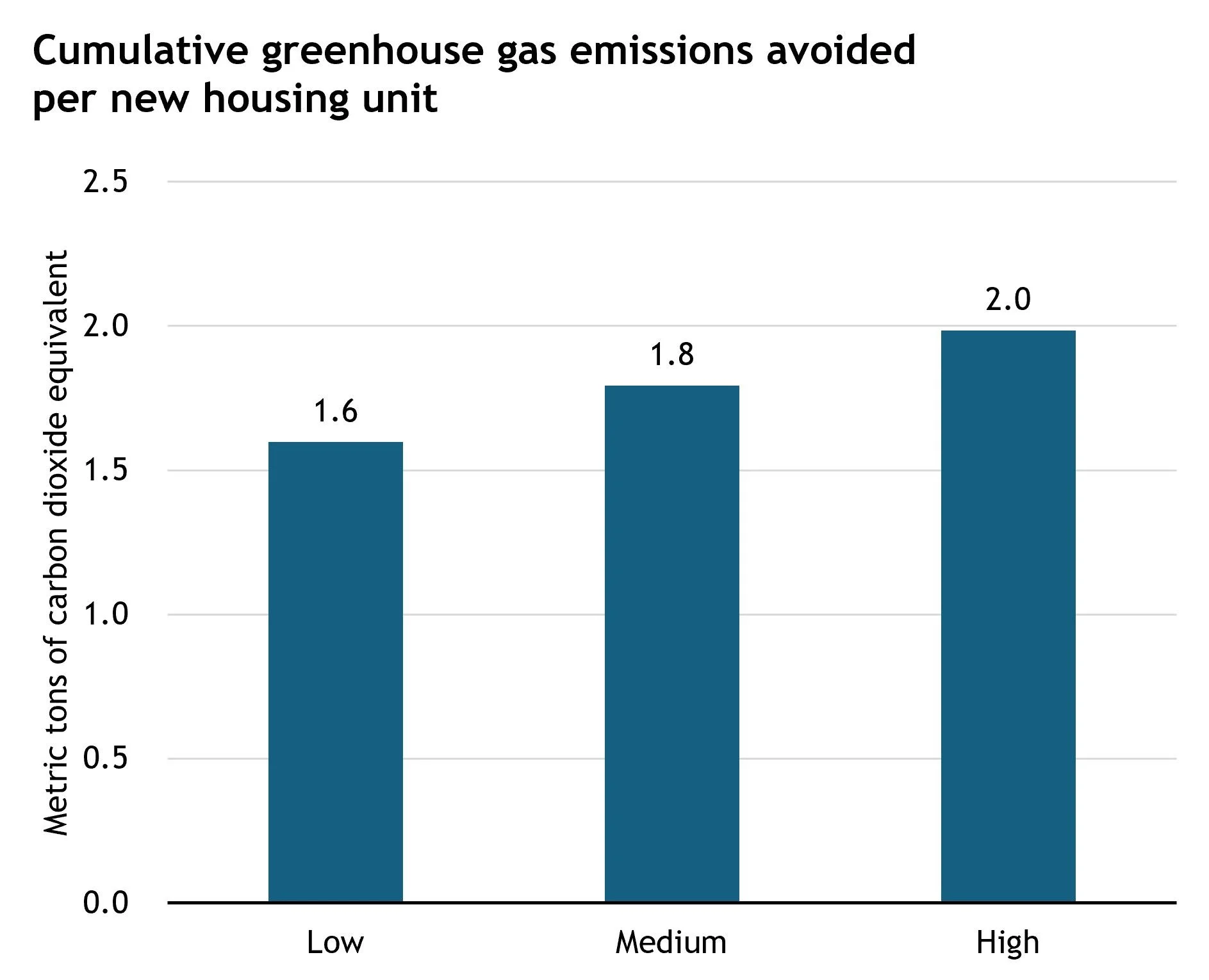
Through the Strong Communities grant program, Lotus partnered with the Colorado Department of Local Affairs and Economic & Planning Systems, Inc. to build a Land Use Impact Calculator. This free tool shows communities the potential housing, economic, and environmental impacts of 24 land use best practices, from allowing diverse housing types to smarter parking management.
Many existing tools that quantify similar impacts are expensive or require GIS expertise. While the calculator is meant for exploratory analysis and is not meant to replace detailed project level studies, it can quickly generate robust metrics to support conversations with community leadership. Any Colorado community can use this calculator to see how best practices around compact development, affordable housing, housing diversity, growth management, transportation, and resource conservation could play out on the ground.
We hope this tool helps make the case for sustainable development patterns and gives planners another way to connect land use decisions to both housing and environmental outcomes.
Lotus Shines at the Colorado Green Business Network Annual Recognition Event
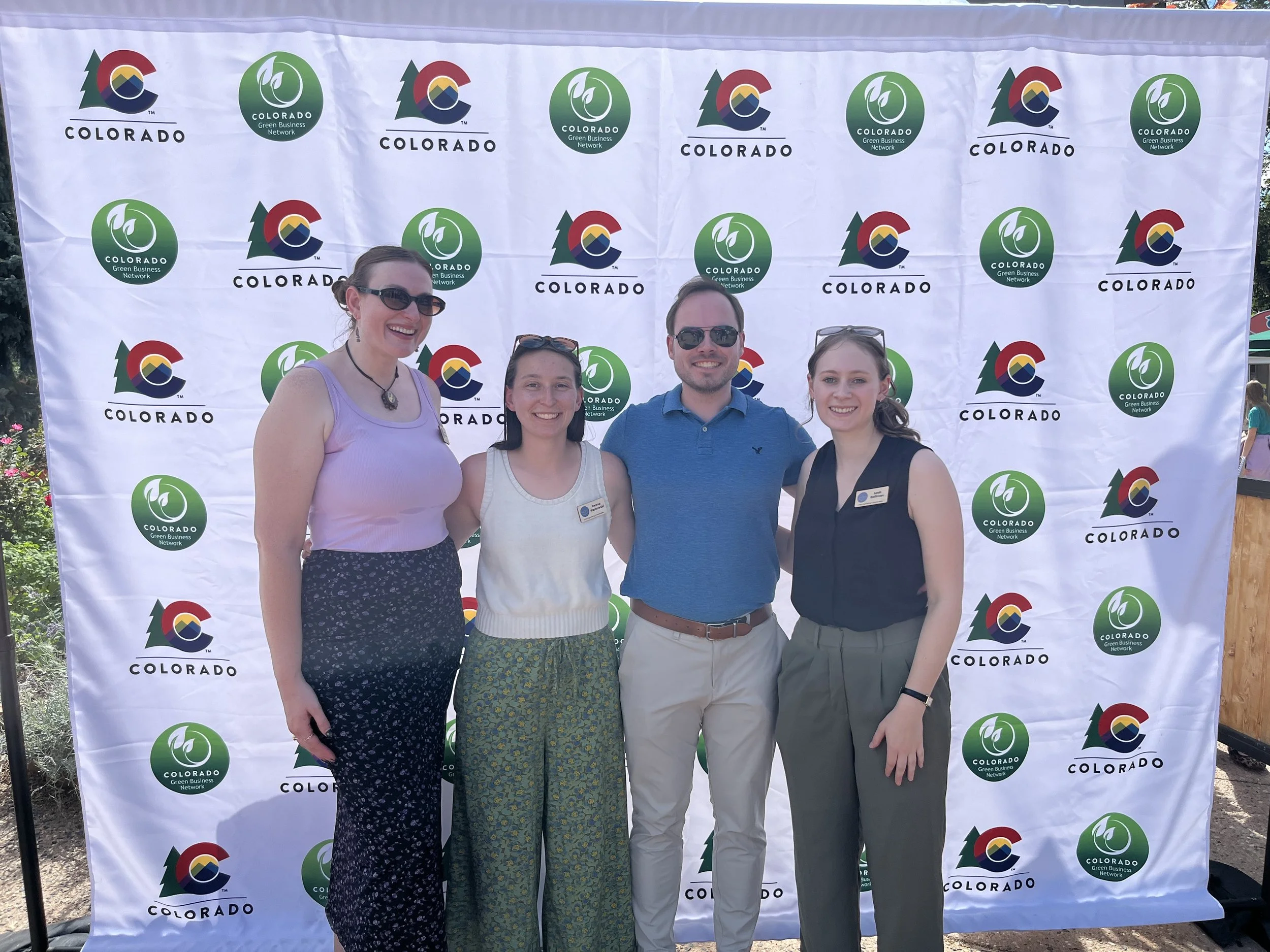
This Fall, Lotus attended and tabled at the annual Colorado Green Business Network (CGBN) Recognition Event, which recognizes and celebrates CGBN Certified Members and provides attendees with the opportunity to connect with recognized businesses, sustainability partners, and the inspiring people who make up the CGBN community. Lotus is proud to be a Silver Member.
Lotus’ tabling at the event included an interactive donation activity where attendees could learn about, and vote for one of three nonprofit organizations which were selected by Lotus staff for support. Lotus is proud to donate a total of $500 to these three incredible organizations: Spirit of the Sun, United Way Southern Colorado, and Community Cycles.
Project Highlights
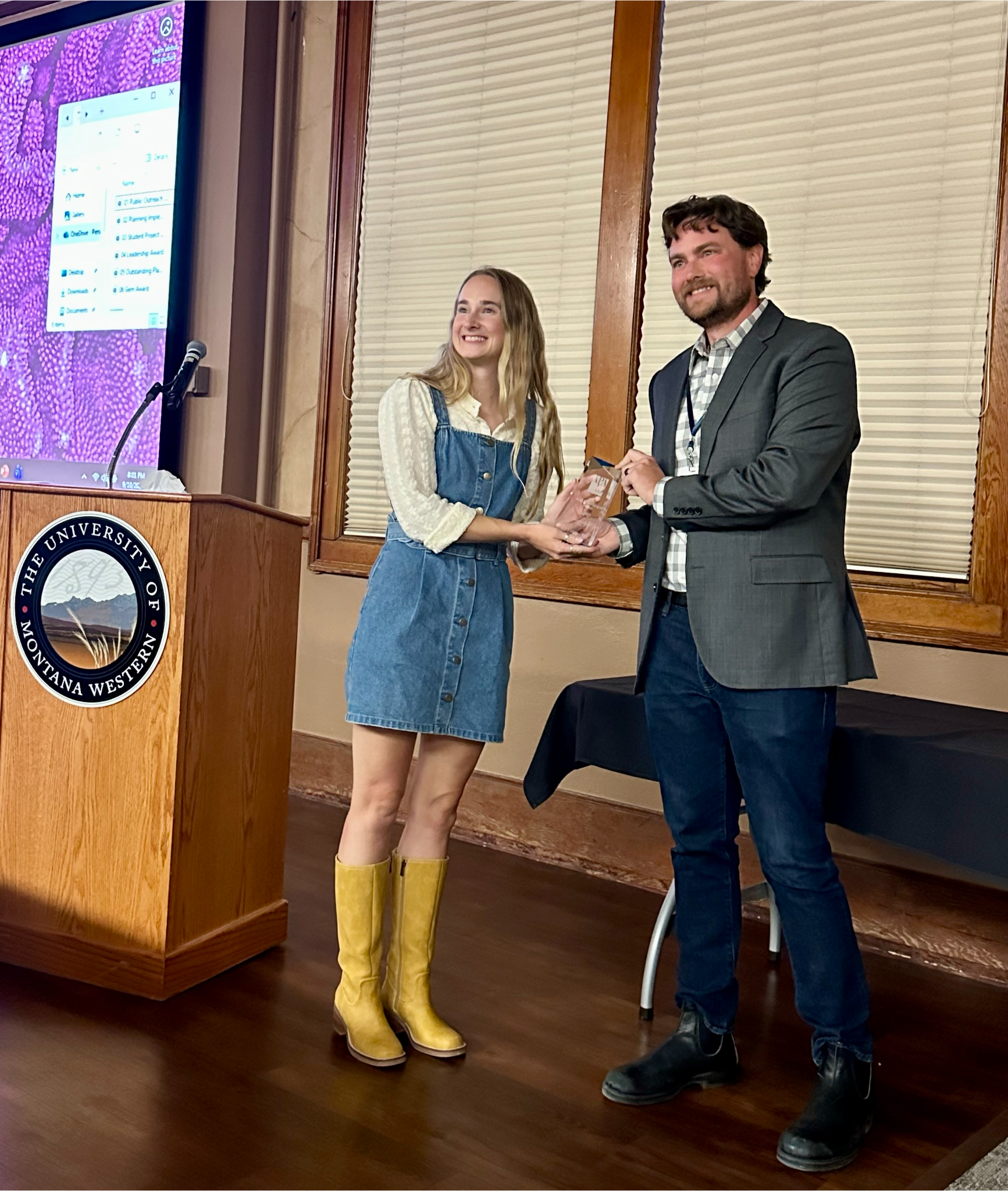
City of McCall Awarded for Rooted in Resilience: A Climate Action Plan
The City of McCall’s groundbreaking, trailblazing, Rooted in Resilience: A Climate Action Plan won both of these awards in 2026:
Small Town and Rural Division of the American Planning Association Award - John Keller Award for Planning Initiative, and the APA Idaho Public Outreach Award.
Lotus is proud to have supported the City of McCall in developing this community-centered, data-driven plan. From deep engagement with local businesses, residents, and the Nez Perce Tribe to integrating local climate education with the University of Idaho MOSS program, this award-winning effort highlights how grounding climate action in shared community values leads to meaningful impact and strong support.

Boulder Valley School District Launches Sustainability Dashboard
Lotus worked with Boulder Valley School District (BVSD) to support and create a new five-year sustainability action plan with the objective of integrating sustainability into operations and curriculum district-wide. Lotus supported BVSD’s goal planning, existing plan updates, and ultimately created a new Sustainability Dashboard for tracking and viewing data related to the district’s sustainability efforts. The digital dashboard shows what sustainability efforts are happening at schools across the district, along with the utility use for each school, and how each school compares to other BVSD schools.

City of Cheyenne Finalizes EPA Grant-Funded Climate Plan
The Cheyenne Metropolitan Statistical Area received a EPA Climate Pollution Reduction Grant to develop a climate action plan to reduce climate pollution emissions. Lotus supported the development of the Comprehensive Climate Action Plan by spearheading climate action planning efforts on behalf of all cities within Laramie County, Wyoming (the MSA).
Lotus conducted extensive community engagement to develop a community context memo that served as the foundation for identifying and framing emissions reductions strategies. At its core, the Cheyenne MSA Comprehensive Climate Action Plan outlines investments in policies, practices, and technologies that
reduce greenhouse gas and other pollution emissions, create high quality
jobs, spur economic growth, and enhance the quality of life for all communities and residents of Laramie County. The plan prioritizes equitable access to benefits and ensures that vulnerable communities receive a fair share of the opportunities arising from investment.
Announcements and Updates
Lotus Joins Registry of Adaptation Practitioners
The Lotus team discussed ADA compliance and accessibility best-practices for graphic design, including font and grammar choices, color contrast, alternative text, figures and data visualizations, and more. Government entities are required by various federal, state, and local regulations to meet certain digital accessibility requirements. This ensures people of different abilities are able to access the same important information and allows assistive technology to properly convey the content. A few key tips include: choosing sans-serif fonts for better readability, choosing high-contrast colors for text and graphics, using left or middle-aligned text, and hyperlinking using descriptive text.
The Adobe contrast checker and color blindness simulator are great tools for ensuring color contrast is easy to see. Adobe also has a helpful video series on how to remediate PDFs for accessibility.
Check out The Accessibility Guy on YouTube for step-by-step walkthroughs of nearly any other accessibility topics or issues.

Marianne joins Lotus as the Business Development Manager
Marianne Martin grew up in California's Santa Cruz Mountains, where she developed a lifelong appreciation for the connection between people, place, and the natural environment. She earned her undergraduate degree in Environmental Conservation from the University of Colorado Boulder. Over the past 30 years in Colorado, she has led conservation and sustainability initiatives for non-profits and higher education, developed sustainability and climate action plans, secured grant funding, and designed award-winning programs that create lasting impact. She enjoys bringing order to complexity, building strong partnerships, and helping organizations find practical paths forward. At Lotus, she focuses on helping mission-driven clients find the expertise, resources, and partnerships they need to turn bold sustainability goals into meaningful action. She's known for connecting people, ideas, and systems to move good work forward.
Funding Opportunities

Power Ahead Colorado’s Community Engagement Grant Program
The Community Engagement Grant Program will support community engagement efforts tied to Power Ahead Colorado, a regional initiative aimed at reducing pollution while improving the health, comfort, and energy efficiency of homes and buildings throughout the Denver metropolitan area. The grant program is funding trusted community organizations to build awareness of heat pumps and home electrification, grow workforce development in disproportionately impacted communities, and connect middle-income homeowners with rebates and incentives.
Applications are due by October 30, 2026, at 5:00pm MT. If you have any questions, please contact CEGrantProgram@kearnswest.com.
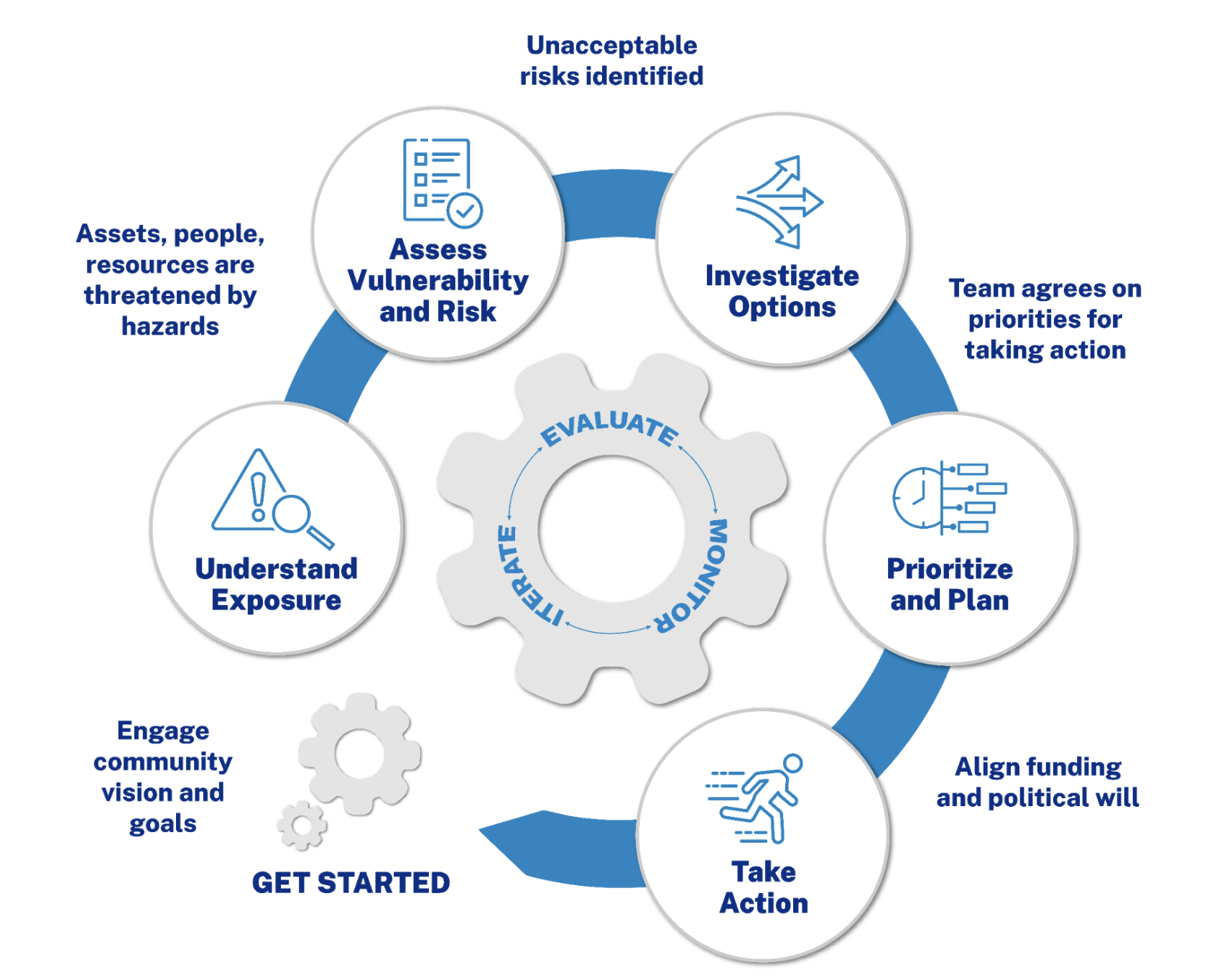
Climate Smart Communities Initiative Launches Funding Cycle for US Climate Resilience Projects
The Climate Smart Communities Initiative (CSCI) announces the launch of the 2027 grant opportunity for U.S.-based climate resilience projects. CSCI provides funding and technical assistance to advance community-based climate resilience in U.S. communities with historically disinvested populations at increased risk of climate-related impacts. CSCI anticipates awarding 16–20 grants in the 2027 cycle. Grants typically range from $75,000 to $115,000 based on the proposed scope of work. Funding is prioritized for communities. Funding priorities include: climate change vulnerability, equity, nature, readiness to increase climate resilience, and capacity building.
Lotus is a Registered Adaptation Practitioner and is open to partnering with community-based organizations and local/ regional governments for the 2027 grant application. Contact us at hello@lotussustainability.com to explore a partnership. Letters of Interest are due to CSCI by November 20th, 2026.