

Missoula | GHG Inventories

Missoula, Montana
Lotus built off of the great work from previous greenhouse gas inventories at the City of Missoula to conduct a municipal and a community-wide greenhouse gas inventory for the year 2023. Along with these inventories, Lotus created an inventory management plan (IMP) documenting all data sources and methods used in the inventory. The IMP also included instructions for updating inventories enabling Missoula to develop their own inventories in the future.

Chaffee County, Colorado | Sustainable Development Plan
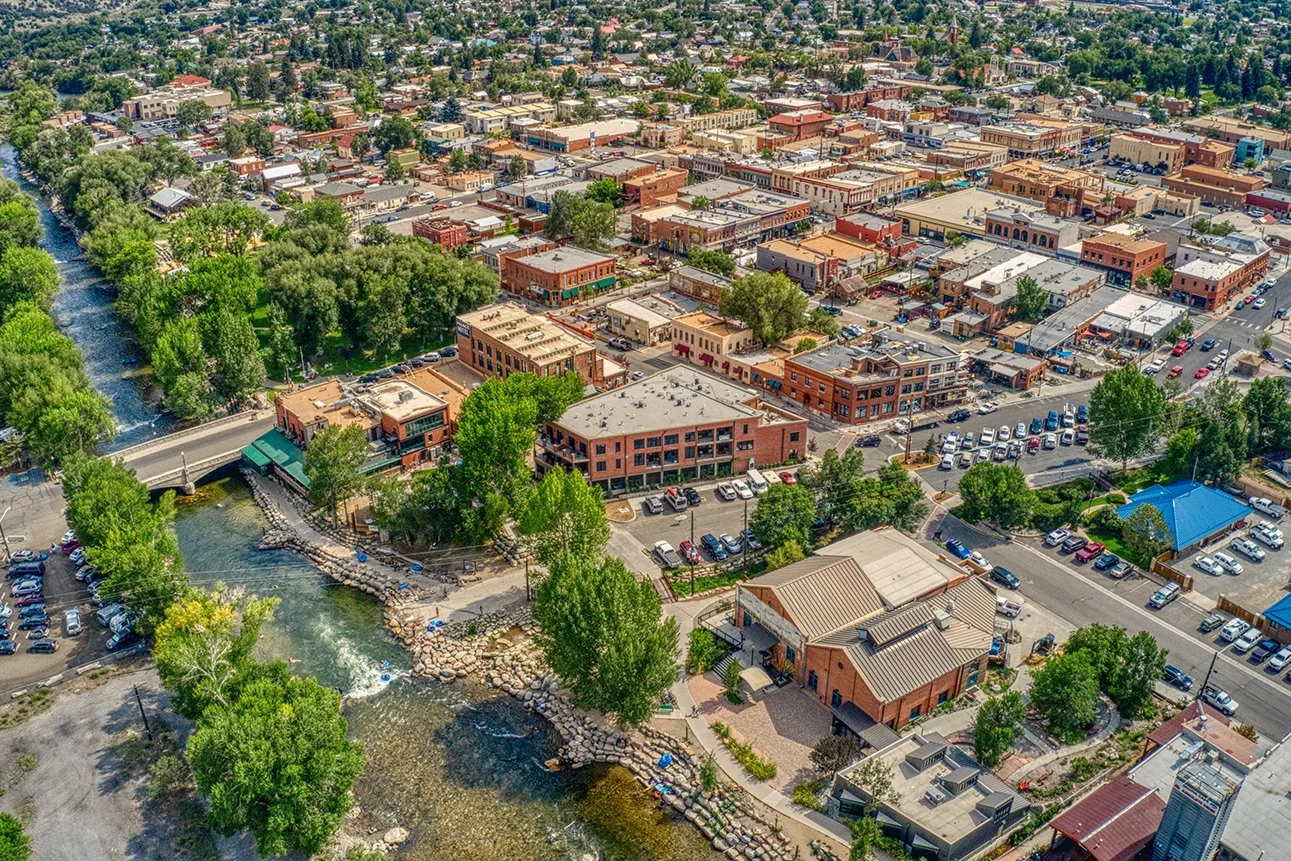
Chaffee County Sustainable Development Plan
Lotus worked with Chaffee County to create the first Sustainable Development Plan (SDP) for the County. This plan was designed to align with existing community plans, identify prioritized goals for sustainable development, determine immediate action steps to implement those goals, and create success tracking metrics. The Sustainable Development Plan included several key sectors of focus including Equity, Resilience, Water, Development, Energy, Transportation, Waste and Resources, Working Landscapes, Social Systems, and Recreation. Lotus conducted engagement with community experts in each focus area to inform the strategies and worked closely with a Steering Committee to review and finalize the plan.

Winter Park, Colorado | GHG Inventories and Climate Action Planning

Town of Winter Park, Colorado
Lotus worked with the Town of Winter Park to complete the first ever greenhouse gas emissions inventories for the town government and the community. In addition to creating these inventories, Lotus developed a business-as-usual emissions model and is modeling several emissions reductions strategies to aid in the Town’s development of its first Climate Action Plan. Due to the small size of the Town, many innovative methods were used to collect and manipulate data to make it relevant to the Town, such as working closely with Winter Park Resort and utilizing Streetlight vehicle miles traveled data.
Lotus also worked with the Town to complete its first ever Climate Action Plan. This will involve the development of a climate risk and vulnerability assessment, additional GHG emissions reduction strategy modeling, cost modeling, and strategy prioritization. Prioritization of the strategies will take into account factors such as cost to implement, GHG emissions impact, funding sources/availability, and equity impacts.

CDPHE | Water Quality Fee Setting Facilitation
Colorado dEPARTMENT OF pUBLIC hEALTH AND eNVIRONMENT
Lotus has been working with the Colorado Department of Public Health and Environment to facilitate a multi-year stakeholder engagement process to prepare the Water Quality Control Division for two rulemakings. As mandated by a bill passed in 2023, the Division must transfer their water quality fees from statute into regulation and update the drinking water and clean water fee structures to account for inflationary impacts and new service requirements.
For this project, Lotus has helped the Division organize its stakeholder engagement efforts and develop tools and processes to work towards consensus on stakeholder feedback, improve transparency in the Division’s decision-making, and help stakeholders new to the process get up to speed quickly. Lotus led monthly large stakeholder group meetings, including preparation of stakeholder communications, meeting agendas, presentations, minutes, and summaries. For the 2024 rulemaking process, Lotus also supported the Division’s bimonthly stakeholder subgroup meetings by providing guidance and feedback on meeting agendas and presentations, as well as taking minutes and providing meeting summaries to post publicly.
Ultimately this work culminated in Lotus assisting the Division in their preparations for the 2024 and 2025 rulemaking processes, management of a diverse array of stakeholders, and communication of a complex, technical subject matter.

Aspen, Colorado | C&D Waste Audit

Aspen, Colorado | Construction & Demolition Waste Audit
Construction and Demolition (C&D) debris management can be a considerable challenge for communities with limited landfill space and/or concerns about methane production in their landfill. Much of C&D debris is often bulky, heavy, and most importantly can be diverted from the landfill to be recycled or repurposed. The city of Aspen has taken this challenge head-on.
In January 2022, the Aspen City Council set a Science Based Target to reduce greenhouse gas emissions 63% by 2030 and net zero by 2050. They also set waste reduction targets to reduce organic material going to landfill by 25% by 2025 and 100% by 2050, and a reduction of all waste going to the landfill by 70% by 2050. While a typical landfill fee approach is to weigh the items going into a landfill, Aspen wanted to better calculate fees based on the environmental impact of C&D materials that should be diverted, but arrive at the landfill unsorted. Using a dataset of Embodied Carbon for materials and the U.S. Environmental Protection Agency’s Social Cost of Carbon, Lotus quantified the present cost of future environmental damage from the material’s life cycle of extraction, production, transportation, and ultimately disposal. Aspen is currently in the process of applying this metric to C&D debris that originates within the City of Aspen.

Edmond, Oklahoma | Resiliency Action Plan

Edmond Resiliency Action Plan
Lotus worked with the City of Edmond to create the city’s first Resiliency Action Plan. The plan centers city-level action around improving on current initiatives and incorporating new strategies that the city can implement to improve resiliency over the next five years. Informational interviews and dozens of focus groups helped inform existing conditions, resources, and programming in Edmond, as well as the desired future conditions for the city. All strategies were vetted and prioritized by Edmond staff. The final plan is a public-facing dashboard that will be regularly and easily updated via a google sheet that tracks KPIs. These metrics will ensure that Edmond knows it is on the right track to meet its goals.

Communications and design for Cleveland’s Climate Action Plans

Lotus, in partnership with ALH Design, led the development and design of several communication tools for the City of Cleveland’s Climate Action Plan and Municipal Action Plan, as well as the design of the two plans themselves. Lotus developed two staff engagement workshops to promote plan implementation efforts amongst City staff to accommodate different audiences and use cases. Our team also created a community toolkit to encourage community-based organizations and individuals to take action. The adaptable and accessible toolkit was designed to meet the wide-ranging diversity of the Cleveland community. The workshops and the toolkit included a detailed step-by-step agenda to guide staff members through facilitating a workshop or community meeting and adapting the materials to their specific audience. Lotus also led the Spanish translation of the public-facing Climate Action Plan. ALH Design led the graphic design of the two plans, including the Spanish language version of the Climate Action Plan, and all social media posts, public-facing workshop materials, and the community action toolkit.

Urban Villages and APARIUM Hotel Group | Populus Hotel GHG Emissions Dashboard

Populus Hotel GHG Emissions Dashboard
Lotus worked with Urban Villages and the APARIUM Hotel Group to create a public greenhouse gas emissions tracking dashboard in Microsoft PowerBI for the Populus Hotel. The dashboard tracks real and predicted greenhouse gas emissions and offset activities from the construction and operations of the hotel over time. The dashboard includes functionality that allows for easy data updates, transparency for specific operations (waste diversion, water, energy, etc.), and tracks whether Populus has achieved their carbon positive goal. Lotus also developed back-end calculations for the quantification of greenhouse gas emissions and documenting methods and assumptions for all calculations in a user guide.

preview of the Populus Hotel GHG Emissions Dashboard

City of Fort Collins | Under-Resourced Buildings Engagement

under-resourced buildings engagement
Lotus worked with the City of Fort Collins to engage under-resourced building (URB) stakeholders. The core purpose of the engagement was to gather insight into specific tools, resources, and other support mechanisms that Fort Collins could deploy to support commercial and multifamily building owners and tenants in achieving greater energy efficiency. Lotus delivered a final report to the client that compiled current stakeholder challenges in pursuing energy efficiency and provided research-backed recommendations for programs that could overcome those challenges. The team successfully engaged all stakeholder types, including, but not limited to, affordable housing providers and nonprofits supporting affordable housing providers, multifamily tenants, business tenants and commercial developers, collecting critical data and program or policy recommendations specific to these building types.
The team applied community-centered principles throughout the engagement process to ensure reach with key URBs. Lotus developed a context guide that documented the factors and processes for the City to consider when developing the engagement strategy, resources, and support services to help URB communities make building improvements. The context guide served as the foundation for fair and defensible engagement throughout the project.
Lotus also developed a stakeholder map of URBs based on the City’s specific, data-driven definition. Our team spearheaded the creation of the matrix of data criteria defining and categorizing URBs. Following that, buildings were specifically identified and targeted for engagement based on their criteria score.
Lotus facilitated a number of engagements, including in-person focus groups, virtual focus groups, informational interviews, and listening sessions. All engagements were planned with a focus on bringing the community together, including providing participant stipends, food, and childcare while ensuring all materials and presentations were translated and interpreted into languages most appropriate for the audiences. Lotus conducted all Spanish written translations in-house. We contracted with the Community Language Cooperative (CLC) to provide interpretation services for in-person meetings in Spanish and for translation services in Vietnamese, Arabic, and Mandarin Chinese.
In addition to engagement, Lotus created a scoring methodology to categorize buildings as URBs. Lotus used building data provided by Fort Collins, affordable housing information, building condition information, energy use, demographic data, and a variety of other datasets to develop a list of URB criteria. Points were assigned to each criteria and buildings were assigned a point total based on the number and type of criteria they meet. URBs were identified based on a point threshold. Additionally, URBs were categorized into tiers to further highlight buildings with the greatest need for assistance. The scoring methodology was vetted through the engagement process and refined to ensure the scoring mechanism reflected Fort Collin’s unique context.
Once URBs were identified through the scoring methodology, Lotus developed a web mapping tool displaying all URBs. The mapping tool included filters and a data update workflow to enable Fort Collins to update the URB list and visualize URBs by tier, building type, or building size.

Colorado Department of Local Affairs (DOLA) | Strong Communities Grant Program Impact Evaluation

Strong Communities Grant Program Impact Evaluation
Lotus, in partnership with Economic Planning Systems (EPS) is completing an analysis to evaluate the effectiveness of the Strong Communities Grant Program. The Strong Communities Grant Program incentivizes the adoption of policies that promote affordable housing and sustainable development. Lotus and EPS are developing a methodology and an analysis tool that assesses the environmental and economic impacts of the land use best practices that are supported by the program. The tool will provide insight into how these best practices can reduce greenhouse gas emissions, vehicle miles traveled, household transportation costs, local government and infrastructure costs. Additionally it will quantify how best practices can increase affordable housing and influence housing costs. Understanding these impacts will allow grantees to communicate the benefits of the land use best practices and provide other communities with insight into how they could benefit from implementing these practices.
In addition to the methodology and tool, Lotus and EPS will create individualized reports summarizing results of the analysis for each grantee. Lotus and EPS will also provide case studies of a sample of projects to enable DOLA to continue to communicate the benefits of the program and the included best practices.

DOLA (Colorado Department of Local Affairs) | RENW Program Impact Evaluation
RENW Program Impact Evaluation
Lotus completed an analysis to evaluate the effectiveness of the Renewable and Clean Energy Initiative (RENW), understand how RENW can be improved, and develop information on how to evaluate future applications for RENW funding. Lotus developed two tools to complete this analysis, an impact evaluation spreadsheet that quantifies the impacts of implemented RENW projects and a cost-benefit analysis tool to assess the effectiveness and feasibility of RENW applications. These analyses assessed reductions in greenhouse gas emissions, energy impacts, and impacts to Disproportionately Impacted and Just Transition communities.
Through discussions with DOLA, Lotus identified key metrics to track and compare project impacts. An interactive evaluation tool was developed that allows DOLA to easily enter any new project data and calculates all identified metrics for all RENW projects. This work aids DOLA in making investments that advance renewable energy generation and reduce GHG emissions in Colorado.

Wheat Ridge, Colorado | Climate Action Plan Update

Climate action plan update
In 2024 Lotus worked with the City of Wheat Ridge to update and formally adopt their Sustainability Action Plan. The community was the impetus for the first Plan, which was created in 2018. Lotus led the strategic analysis of the 2018 plan, which involved a comprehensive review of relevant City plans, as well as regional, state, and federal plans and initiatives. This review allowed the client to utilize existing collaborations and funding to force-multiply their sustainability efforts. Lotus also engaged City staff and key stakeholders to contextualize the 2024 plan update and identify critical opportunities, and guided community engagement to garner community input on sustainability priorities and strategies. Lotus sought to capture the grassroots, community-driven spirit of the plan and ground the plan update in the key implementation details that City staff would champion.

Birmingham, Alabama | Sustainability Action Plan

Sustainability Action Plan
Lotus, alongside Hummingbird, are partnering to produce a Sustainability Plan that will promote efforts to adopt best practices that address equity, social justice, environmental justice, air quality, soil contamination, water quality and efficiency, water quantity, energy and resource use, placemaking and equitable land use, and community health. The plan will be grounded in sustainability that balances the triple bottom line of economic, social and environmental aspects.
The project will result in three key deliverables: 1) an inventory of existing conditions (socio-economic and energy efficiency and resource management inventories); 2) the development of a Sustainability Action Plan and; 3) the development of tools to monitor progress and evaluate results of implementing the action plan, including a vulnerability mapping tool that Lotus developed.
All of this work will be supported by an in-depth engagement plan including facilitating a Steering and Implementation Team composed of internal, City stakeholders and external, community stakeholders. Engagement will include a significant level of public outreach such as town hall–style meetings, focus groups, and a website set up for public comment.

Commerce City, Colorado | Climate Action Grants Consultant

Climate Action Grants Consultant
Lotus, OSS, and Pinyon worked with the City of Commerce City (C3) to support their sustainability-focused grant writing projects. Lotus has worked with C3 in the past to create their Sustainability Action Plan and support their Environmental Policy Advisory Committee. The grant writing services were a rewarding extension of this multi-year partnership as we worked to fund their sustainability goals. We collaborated with the city’s grants coordinator to identify opportunities aligned with the city’s goals and drive applications to completion. Our team helped to coordinate stakeholders to create coalitions that will improve the competitiveness of each application. We also streamlined processes to expedite the grant writing and developed a prioritization methodology to identify strategies that will win funding.
Our team worked with community partner, Black Parents United, to apply for $17 million for the EPA Community Change Grant. We also helped C3 to establish a relationship with the non-profit, Spirit of the Sun. Spirit of the Sun is an indigenous organization that works with disadvantaged communities in urban areas and on reservations to boost resilience. Lotus led the grant writing process for C3 and Spirit of Sun in pursuit of a $250,000 CDPHE Environmental Justice Grant. The project seeking funding (designed in large part by Lotus) is titled Project Grow! Commerce City. It is a targeted environmental health initiative aimed at restoring the environment in disadvantaged communities through a two-pronged approach to improving soil quality. The first approach will assess the quality of the soil in Commerce City’s public right of way. The second approach will provide access to viable soil to community members and equip them with permaculture knowledge to catalyze change across the city. The award is still pending.

Cheyenne, Wyoming | Comprehensive Climate Action Plan
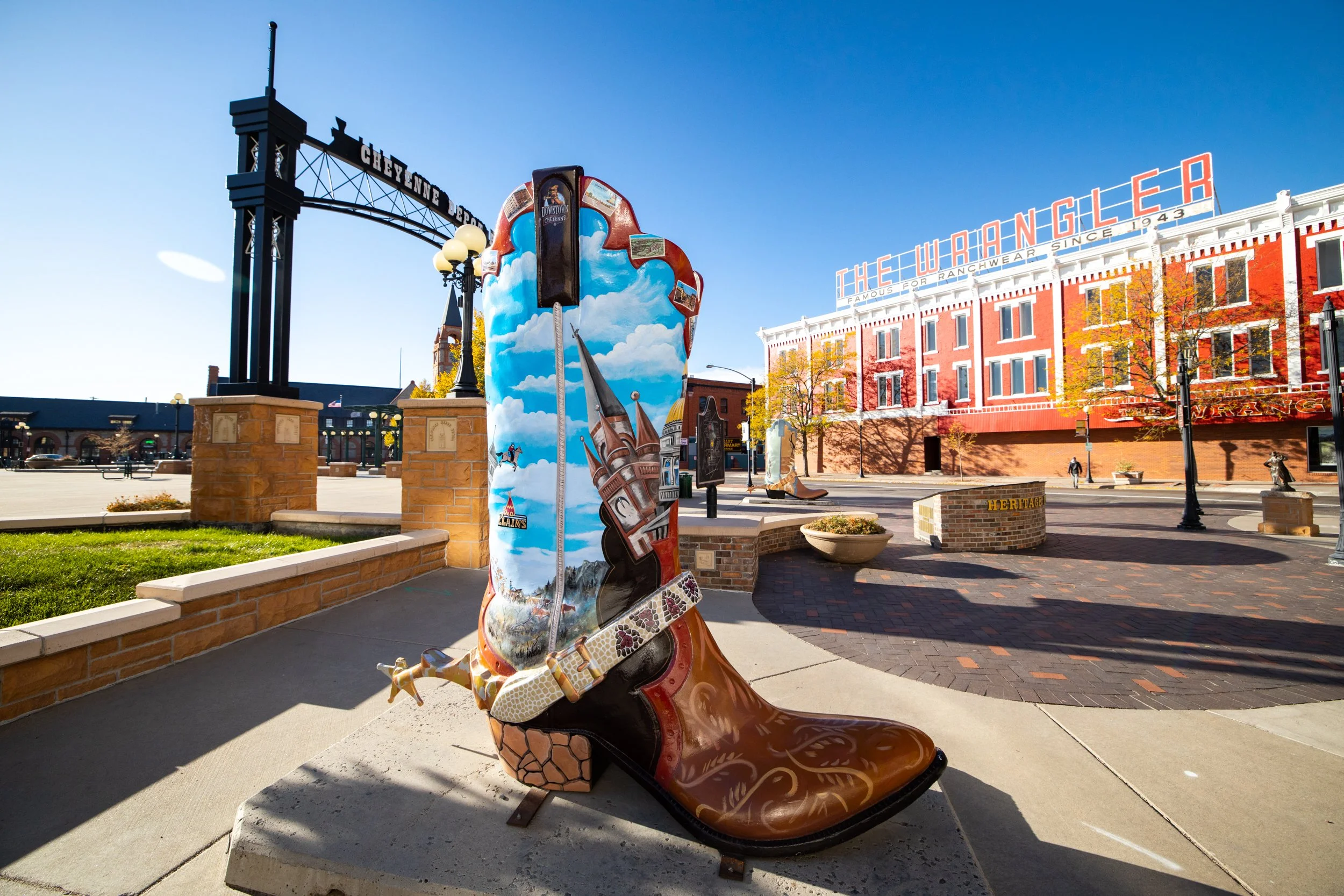
City of Cheyenne Comprehensive Climate Action Plan
Lotus is currently working with the City of Cheyenne to fulfill the requirements of their awarded Climate Pollution Reduction Grant (CPRG) from the Environmental Protection Agency (EPA). Lotus’ role is to complete the Comprehensive Climate Action Plan (CCAP) including a community and local government greenhouse gas inventory, business-as-usual forecast, emission projections, and strategy prioritization and modeling. Lotus will also conduct community engagement, develop partnerships with surrounding communities, and more.
To date, Lotus has led and facilitated multiple community and partner engagements and is developing a “sustained engagement” plan for the City of Cheyenne to utilize once the grant funds are expended. Lotus has also connected with community interests around clean water and resource conservation, aligning with the requirements of the grant to maintain community connections and buy-in to the planning process.

Blaine County, Idaho | County-Wide GHG Inventory

County-Wide GHG Inventory
Lotus worked with Blaine County, Idaho to complete a 2023 county-wide greenhouse gas emissions inventory. The inventory includes breakout tabs for the following communities: Hailey, Ketchum, Sun Valley, and Bellevue. The project updated previous inventories for the multiple communities and aligned methods and data sources across each community. The workbook also included a tab with activity and emissions data to be imported into ArcGIS Online allowing for easy creation of an interactive online dashboard to show the results of the inventory.

Boulder Housing Partners Behavioral Change Program

In concert with two other consulting firms, Lotus helped Boulder Housing Partners reach their goal of becoming the nation's first net-zero energy housing authority through an innovative occupant engagement program. The project involved outreach and education to BHP residents regarding energy consumption and energy efficiency and included in-depth work on behavioral change models that can be effective to reduce energy use.
“Hillary and Emily were amazing to work with. They jumped into a project that had been delayed several times due to a number of obstacles. They were able to resurrect the project and get it done on time and under budget. They were thoughtful, efficient and helpful on all phases of our project. I would highly recommend their services for any sustainability project.”

City and County of Denver | Home Energy Score Program Evaluation

Home Energy Score Program Evaluation
Lotus worked with the City and County of Denver’s Office of Climate Action, Sustainability, and Resiliency to conduct a program evaluation of the city’s Home Energy Score pilot program. The purpose of this program was to spur investment in energy efficiency at the point of sale of a home. Lotus analyzed survey data, home energy score data, qualitative interviews, and other data points to develop an analysis of the Home Energy Score program, an assessment of how it can support Denver’s energy reduction goals and recommendations for furthering that impact, and other ways Denver may compel homeowners to invest in efficiency at or around the point of sale. The results were delivered in a comprehensive program evaluation with a full report.

City and County of Denver | Energize Denver Equity Priority Buildings Facilitation Services

Energize Denver Equity Priority Buildings Facilitation Services
First, the City and County of Denver’s Office of Climate Action, Sustainability, and Resilience (CASR) Energize Denver program partnered with Lotus to inform equity priority building (EPB) owners about forthcoming building performance standards (BPS) for small buildings and gather insight into specific tools, resources, and other supports Denver may be able to offer to support these building owners in meeting the requirements. This project offers an overview of Lotus’s core steps and deliverables designed to foreground equity in the stakeholder engagement process: equity guide, stakeholder map, engagement plan, and final report.
First, the equity guide identifies the factors and processes to consider when developing the engagement strategy, resources, and support services to help Denver’s EPB community meet the City’s BPS. The guide (1) contextualizes the need for an equity-first approach to community engagement and program development, (2) explores existing equity-first approaches that the City has undertaken, and (3) outlines equity-first best practices and processes for use in this current relationship-building phase and for consideration in future equity-focused engagement work by CASR. The equity guide served as the foundation for equitable engagement throughout the project, as well as offered insights into potential strategies and programs that may work well for the project.
Next, Lotus developed a stakeholder map of buildings that were between 5,000-24,999 square feet. The stakeholder map forms the basis for targeting engagement efforts, ensuring the project team is aligned on who to engage and when, how, and why. All data was run through a series of filters, including the percentage of affordable housing units in the building, whether the buildings were in Neighborhood Equity & Stabilization (NEST) neighborhoods (neighborhoods identified by the City that are facing rapid change and increased cost of living, rent, labor, and materials), and building location compared to census tract. Following that, buildings were specifically pulled out based on their Equity Index.
From the research conducted for the equity guide and the stakeholder map, Lotus crafted and facilitated a number of engagements, including in-person and virtual focus groups, informational interviews, and listening sessions. All engagements were planned with a focus on equity, including providing participant stipends, food, and childcare while ensuring all materials and presentations were translated and interpreted into languages most appropriate for the audiences. Lotus also conducted all Spanish translation in house, contracted the Community Language Cooperative (CLC) to provide interpretation services for in-person meetings in Spanish, and contracted CLC for translation and interpretation services to Vietnamese.
As evidence of Lotus’s flexibility and responsiveness to the community, we focused on deploying informational interviews with key community connectors and convening or attending community meetings led by trusted community partners, such as BuCu West, DEDO, Little Saigon Business District, and Vecinos Unidos. This adaptive approach opened the doors to facilitating informational interviews with stakeholders from business improvement districts, property management, brokers, industrial contractors, and HOA boards. All engagements held space to listen to concerns and co-create solutions.
Finally, Lotus drafted a report summarizing engagements and providing recommendations and guidance to Denver on opportunities to improve services and resources for EPB owners to better compel compliance with Energize Denver requirements. The final report was written in English and translated into Spanish to reach a broader audience and continue equitable practices during the project process.

City and County of Denver | 80 x 50 Climate Action Plan, Annual ghg Inventory report, GHG Strategy Modeling

80 x 50 Climate Action Plan & Annual GHG Inventory
The City and County of Denver’s 80x50 Climate Goal: Stakeholder Report establishes a path to reduce community-wide GHG emissions by 80 percent by the year 2050. Lotus led the development of Denver’s 80x50 Plan by conducting a review of processes and plans already established by the City; conducting a needs assessment; working with a diverse network of over 80 stakeholders and community experts in the fields of energy and transportation to identify the most relevant and impactful strategies for Denver to pursue; modeling the impacts of stakeholder-identified emissions reduction strategies; and drafting a CAP that will support the City in achieving its goals. Additionally, Lotus completed Denver’s community GHG inventories for calendar years 2018-2022.

2023 Annual Report “Building a Carbon Free, Sustainable, and climate-resilient Denver for All”
Lotus developed a greenhouse gas (GHG) reduction strategy model to analyze the impact of the programs implemented by Denver’s Office of Climate Action, Sustainability and Resiliency (CASR) from 2021 through 2023. The model provided consistency in calculating GHG impact across all of CASR’s programs as well as inform the programs used to achieve Denver’s zero emissions goal by 2040. Lotus utilized industry best practices consistent with accepted national and international standards for GHG emissions accounting to estimate the impacts of CASR’s programs. Deliverables included a detailed model, documentation of methods and assumptions, and graphic design of emissions visualizations for the report. The project was completed on-time and within budget.

Greenhouse Gas Strategy Modeling
Lotus supported Denver’s Office of Climate Action, Sustainability and Resiliency (CASR) with greenhouse gas (GHG) emission reduction strategy modeling to analyze the impact of the Climate Protection Fund. Lotus has calculated the GHG emission impact and carbon abatement cost of sixteen programs across the High Performance Buildings and Homes, Mobility and Energy Transition, and Zero Waste and Circular Economy teams at CASR. The results from this project will help ensure consistency in calculating GHG impact across all programs as well as inform decisions about what programs to scale up and what to scale back to achieve Denver’s zero emissions goal by 2040 in a way that improves equity.