

City and County of Denver | Renewable Heating and Cooling Plan (Building Electrification)

Renewable Heating and Cooling Plan (Building Electrification)
Lotus led the development of the City and County of Denver’s Renewable Heating and Cooling Plan, a roadmap for beneficial electrification in existing buildings. As part of this process, Lotus convened stakeholders from across the metro area and the State to understand the impacts of electrification on the workforce, disproportionately impacted communities, building owners of all sizes, homeowners, equipment manufacturers, and other stakeholders.
Lotus managed a variety of engagement activities ranging from surveys and one-on-one interviews, to large focus groups and workshops. In addition to the public input that helped to shape the plan, Lotus worked with subcontractors to complete a building stock and technology transition analysis and a grid and cost impact analysis. The final plan includes not only details on the technical components of electrification, but also the various levers (i.e., policy, financial, incentive, programmatic, and communications) that can be triggered to support full electrification of Denver’s applicable building stock over the coming decades.
Lotus has been lucky enough to consistently work with the City and County of Denver since 2016. Other work Lotus has completed for the City and County of Denver includes:
-Completed GPC-compliant GHG emissions inventories every year since 2017, CDP Reporting, and developed Denver’s first municipal operations inventory (2020).
-Completed a life-cycle GHG analysis for waste.
-Completed an embodied carbon analysis for buildings. (see below)
Lotus developed the maps below to use data to inform Denver’s Electrification plan. The maps showed inequities and helped identify vulnerable populations.

“Lotus partnered with Denver to create our Renewable Heating and Cooling Plan. The plan was practical and achievable yet pushed the boundary of what is possible. They excelled at project management, keeping the project partners on task. They led fun, engaging discussions with a variety of stakeholders whose insight helped shape the plan. Once all the quantitative and qualitative data was collected and analyzed, they synthesized the findings into a plan that could be understood by the public, and not just limited to those with an electrification background. We are thrilled with their work and would recommend them for future projects!”
“Lotus has been an exceptional partner in the development of a key technical roadmap that will lead to strong policy implementation. They are helping us address all the challenges and opportunities regarding building electrification in existing buildings.”

Adams 12 Five Star Schools | GHG Inventory And Related Work

GHG Inventory And Related Work
Lotus developed the first GHG emissions inventory for Adams 12 Five Star Schools for activities in 2017, which included a measurement of emissions generated from energy use, fleet activities, industrial product use (i.e., refrigerants), waste, wastewater treatment, and consumption-based sources (i.e., paper, food, and fertilizer). Lotus developed the tool to align with the Sustainability Indicator Management and Analysis Platform (SIMAP) so that the district could compare its emissions with other school districts using SIMAP. Along with the GHG inventory, Lotus provided a summary report and an Inventory Management Plan (IMP) so that Adams 12 staff could complete this work in-house in future years. Following the completion of the GHG inventory, Lotus assisted Adams 12 in auditing the district's 2018 inventory (completed in-house with the guidance set forth in the IMP) and also created a modeling tool to measure the impact of the district's sustainability goals on GHG emissions.

Albuquerque | Climate Pollution Reduction Grant Data Consultant

Climate Pollution Reduction Grant Data Consultant
Lotus is currently working with the City of Albuquerque, New Mexico to complete several projects to support its Comprehensive Climate Action Plan (CCAP) as a part of Albuquerque’s Climate Pollution Reduction Grant (CPRG). Lotus’s scope includes the creation of a four county-wide community greenhouse gas and co-pollutant emissions inventories, a business-as-usual model, and greenhouse gas emissions reductions forecasting for all measures included in the City’s CCAP. Lotus will also support Albuquerque in developing several other deliverables necessary for the CCAP, including a workforce analysis, regular federal reporting, and a cost analysis for the measures included in the CCAP.
Albuquerque has also requested Lotus support additional CPRG-funded projects that include developing a benefits analysis, assistance with guiding a climate vulnerability assessment and tree canopy analysis, graphic design for the CCAP, and drafting educational materials for a take action campaign.
Additional scope that Lotus will provide beginning in 2026 includes developing a benefits analysis to inform the development and implementation of climate pollution reduction measures. The benefits analysis will include a climate vulnerability assessment, tree canopy model, and other relevant activities to help local governments prioritize climate action and implementation. Lotus will utilize existing data sets and models, and where unavailable, will conduct research or interviews to fill any information gaps.
For the Climate Vulnerability analysis, Lotus will summarize current risks, threats, and hazards and will detail predicted future vulnerabilities to the four counties and City of Albuquerque, including those to social, economic, environmental, and infrastructure, amongst other sectors. The full vulnerability and risk assessment will include a write-up with key takeaways.
The tree canopy model will include the identification of high-impact tree planting locations (LIDAC focus, maximizing co-benefits such as traffic calming, home energy savings, etc.). The overlay map of data will include available data such as demographic data, heat data, and transportation data down to the census block group. It will also overlay city property and parks.

Lafayette, Colorado | Sustainability Report

2021 Sustainability Report
Lotus wrote Lafayette’s 2021 Sustainability Report, communicating the progress Lafayette has made on the goals laid out in the City’s 2021 Sustainability Plan. This work included informational interviews with several Lafayette community members involved in sustainability work. Additionally data to track the progress toward each goal were collected, organized, and analyzed. The final report was designed to be data visualization and graphic heavy to effectively communicate results.

Lafayette, Colorado | GHG Inventory

2019 GHG Inventory and infographic
Lotus developed Lafayette’s 2019 community GHG inventory, wrote a final report, and created an infographic to communicate the results of the inventory and highlight progress toward the City’s climate goals. Lotus also created an Inventory Management Plan (IMP) to document all data sources and methodology used in the inventory.

Denver Regional Council of Governments (DRCOG) | Climate Pollution Reduction Grant

Climate Pollution Reduction Grant
Lotus is currently working with DRCOG to fulfill the requirements of the agency’s $1 million Climate Pollution Reduction Grant (CPRG) from the Environmental Protection Agency (EPA). As part of this process, Lotus supported data collection, emissions calculations, modeling, stakeholder engagement, and strategy development and prioritization for DRCOG’s Priority Climate Action Plan. Currently, Lotus is supporting stakeholder engagement and related tasks to develop the regional Comprehensive Climate Action Plan.
To date, Lotus has led and facilitated multiple community and stakeholder engagements, and facilitated an equity subcommittee. Lotus conducted an all-day workshop that brought together representatives from communities across the 12-county region to organize implementation details for the eight PCAP strategies. The stakeholder engagement process that was deployed for the PCAP and will continue for the CCAP, has ensured that a broad constituency of community members from across the DRCOG region are engaged in, and empowered to participate in the resulting PCAP strategy implementation process. The creation and participation of the equity subcommittee as part of the PCAP process helped to ensure that the final implementation details for the PCAP strategies are informed by the communities that will be most impacted by this work.
DRCOG’s Priority Climate Action Plan was submitted to the EPA with the corresponding grant application for CPRG Implementation Funds. DRCOG secured grants funds for the Decarbonize DRCOG Program, the funding mechanism for the program related to this RFP and proposal.

YMCA of the Rockies | Sustainability Action Plan And Cost-Analysis

Sustainability Action Plan And Cost-Analysis
Lotus worked with YMCA of the Rockies to support the development of a Sustainability Action Plan that addressed the sustainability objectives of the YMCA of the Rockies strategic plan. The project actively engaged YMCA of the Rockies staff to foster a culture of sustainability within the organization and facilitate the implementation of effective climate action strategies. To support this work, Lotus conducted a comprehensive greenhouse gas emissions inventory of both campus locations, as well as emissions modeling of sustainability strategies to gain insights into YMCA of the Rockies' environmental footprint and which strategies would be most impactful. Furthermore, Lotus developed a cost evaluation of carbon emission reduction strategies for the YMCA of the Rockies. The strategies evaluated for implementation costs were also those that were modeled by the Lotus team for their anticipated carbon reduction impact. To ensure holistic implementation of the Sustainability Action Plan, Lotus worked with guest-facing staff to develop a Best Practice Guide and Lesson Plan for guest engagement in sustainability initiatives.
Finally, Lotus worked strategically with YMCA staff to bring forward a GHG reduction goal to the YMCA Board of Directors and Senior Leadership to ensure the plan and associated goal were aligned with the mission and values of YMCA of the Rockies and that the Board understood the responsibilities associated with setting a GHG target for the organization.
“Over the past year, YMCA of the Rockies has had the pleasure of working with Lotus on the creation of our comprehensive sustainability action plan. Through this process, Lotus has helped us to create a plan that aligns with our needs as a mission-based organization. Their thoughtful approach to creating a plan that encompasses all aspects of our needs has ensured that we are setting goals we feel confident in. From understanding our unique needs as a non-profit, to facilitating meaningful conversations with stakeholders of varying climate expertise, Lotus has successfully navigated through the process of developing a plan molded specifically to who we are as an organization. We are glad we chose to work with Lotus on such an important aspect of our mission.”

Larimer County | Climate Smart and Future Ready Implementation Plan

Climate Smart and Future Ready implementation plan
Lotus supported the development of the Larimer County Climate Smart and Future Ready implementation plan. This detailed roadmap defines how the County and its partners across the region will work towards climate mitigation and resiliency over the coming years. The implementation planning process included collaboration with entities across Larimer County through topical working groups, the completion of a series of GHG inventories to ensure that decisions were backed by data, and public outreach through a website, videos, and other channels. Lotus also conducted emissions and cost modeling to help Larimer county understand the implementation costs and anticipated carbon reduction impact for proposed strategies. The final roadmap and progress dashboard serves as a jumping off point to make significant progress to reduce GHG emissions, improve resiliency, and enhance the quality of life across Larimer County.
View the Social Pinpoint Site HERE.
“The Lotus Engineering & Sustainability team has been one of the most professional, most responsive, most flexible, and most positive consulting firms I have worked with. Sustainability and climate related projects are some of the most controversial and problematic to work on. Lotus was able to combine their proactive approach, really listening to me, the client, and the community partners, with technical expertise to make our project successful.”

Dubuque, Iowa | GHG Inventory and BAU Project

GHG Inventory and BAU Project
Lotus worked with the City of Dubuque to estimate the city’s 2022 community-wide greenhouse gas emissions. The city was looking for a consultant to verify their inventory and methodology as it had been done previously by student volunteers at the University of Northern Iowa. Lotus compared previous inventories to the standard GPC protocol and was able to suggest new emissions sources that can be included in the inventory and also wrote an inventory management plan so city staff can update the inventory workbook in the future. Lotus also updated the City’s business-as-usual model with the latest emissions and projections. The project was capped off with a presentation to the Dubuque City Council and a final report.


Denver International Airport | Net Zero Emissions Plan

Net Zero Emissions Plan
Lotus completed a full QA/QC analysis of all past DEN greenhouse gas inventories. This work cumulated in a deeper understanding of recent reductions and increases in emissions and the creation of a process improvement plan to identify gaps and improve data collection. Alongside this work, Lotus completed research and interviewed staff to identify gaps, opportunities, and current and future successes. The result was a list of recommended strategies (High Impact Actions) to achieve our proposed science-based targets including:
Identifying possible activities and associated emissions reductions.
Identifying potential barriers including such as estimated costs; awareness/attitudes; countervailing priorities/projects; technology/scale limitations; areas outside of DEN control (Electric supply limitations); and areas where DEN has partial control (vendors).
Identifying potential tailwinds such as policy and regulatory changes; funding Increases; grant opportunities; partnerships; and City and County of Denver initiatives.

City of Bozeman | GHG Inventory, Infographic, and Report

GHG Inventory, Infographic, and Report
Lotus developed Bozeman’s 2020 community GHG inventory and developed an inventory management plan for the City’s new Sustainability Associate. Lotus also presented the results of the inventory in person to the City’s Sustainability Board and trained the Bozeman team on how to update the inventory workbook in future years. Additionally, Lotus created a final report that described the results of the inventory, trends between the baseline year (2008) and the 2020 inventory, and results from an analysis of the average annual carbon sequestration of the city’s lands using the LEARN tool from ICLEI. Lotus also developed an infographic for the City to use when communicating the results of the inventory with residents and important stakeholders.

Park City, Utah | Community GHG Inventories

Community GHG Inventories
Lotus first worked with Park City in 2017 to create the City’s 2016 community-wide greenhouse gas emissions inventory. Lotus later worked with the City again in 2022 to develop follow up inventories for calendar years 2020 and 2021. The Global Protocol for Community Greenhouse Gas Emissions Inventories (GPC) was utilized to complete all inventories.

Mission, Kansas | Community-Wide and Municipal GHG Emissions Inventories; Climate Action Task Force Facilitation

Community-Wide and Municipal GHG Emissions Inventories; Climate Action Task Force Facilitation
Lotus worked with the City of Mission, Kansas to complete the City’s 2022 community-wide and municipal operations greenhouse gas emissions inventories. Additionally, Lotus was tasked with creating inventory management plans for each inventory for the City to use in updating the inventories in future years. Lotus summarized the results of both inventories in a final report and developed a Storymap to communicate the results of the inventories to the wider community. Lotus also presented the results to the City Council and helped facilitate a community meeting aimed at gathering input from community members about sustainability efforts in the City and greater Kansas City region.
Additionally, Mission contracted with Lotus to help assist the newly hired City Administrator with updates to the greenhouse gas emissions inventories as well as to facilitate the City’s Climate Action Plan Task Force. The Task Force is charged with helping City officials to prioritize and implement actions within the City’s climate action plan. Lotus facilitated 4 meetings with the Task Force and assisted the Task Force in developing a Prioritization Matrix for the City’s climate action strategies.

Deer Valley Resort | Climate Action Plan

Climate Action Plan
Lotus partnered with Deer Valley Resort to develop a climate action plan for their resort operations. The Deer Valley Climate Action Plan will help the resort address their operational carbon footprint, prioritize implementation strategies, and clearly communicate their climate action commitments to their visitors and staff. Lotus’s approach walked the client through the crafting of a set of prioritization metrics through which the resort can assess its next steps: from proactively addressing climate risks to tackling critical opportunities in their infrastructure to empowering staff to solve problems.
Lotus’s expertise in adapting climate plans to fit a specific culture, environment, and circumstance shines in this resort climate action plan. The scope of work includes workshops with the Senior Leadership Team, focus groups and informational interviews with staff, a site visit to meet with all resort departments, a business-as-usual emissions forecast, climate adaptation and mitigation strategies, and a designed climate action plan document.
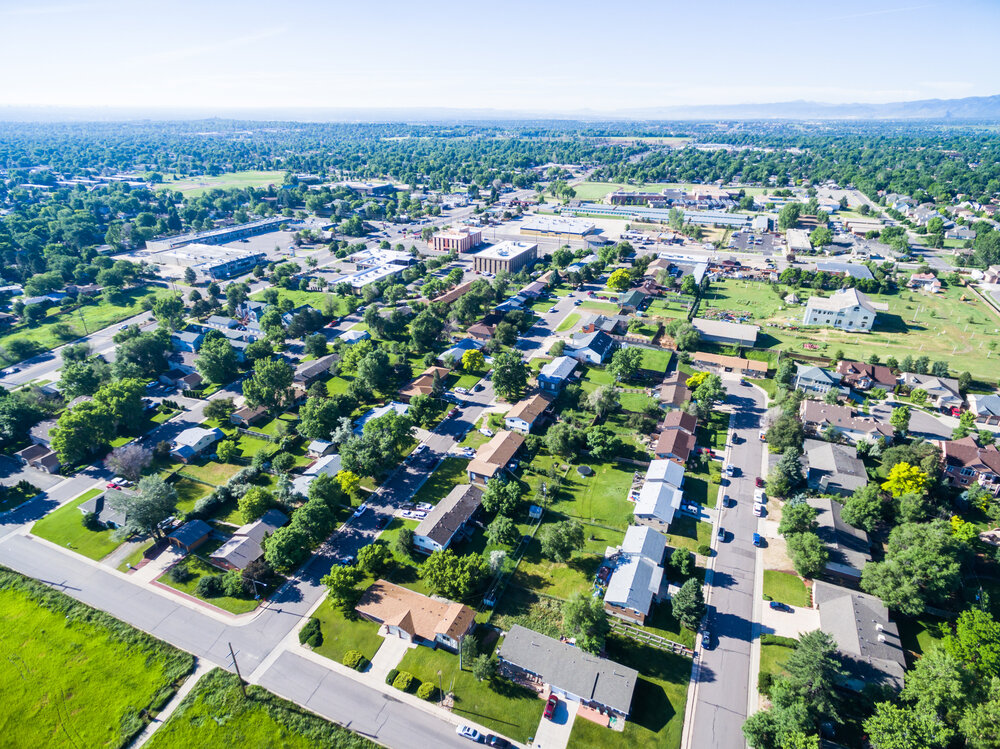
Lakewood, Colorado | Municipal GHG Emissions Inventory and Emissions Reduction Analysis
Municipal GHG Emissions Inventory and Emissions Reduction Analysis
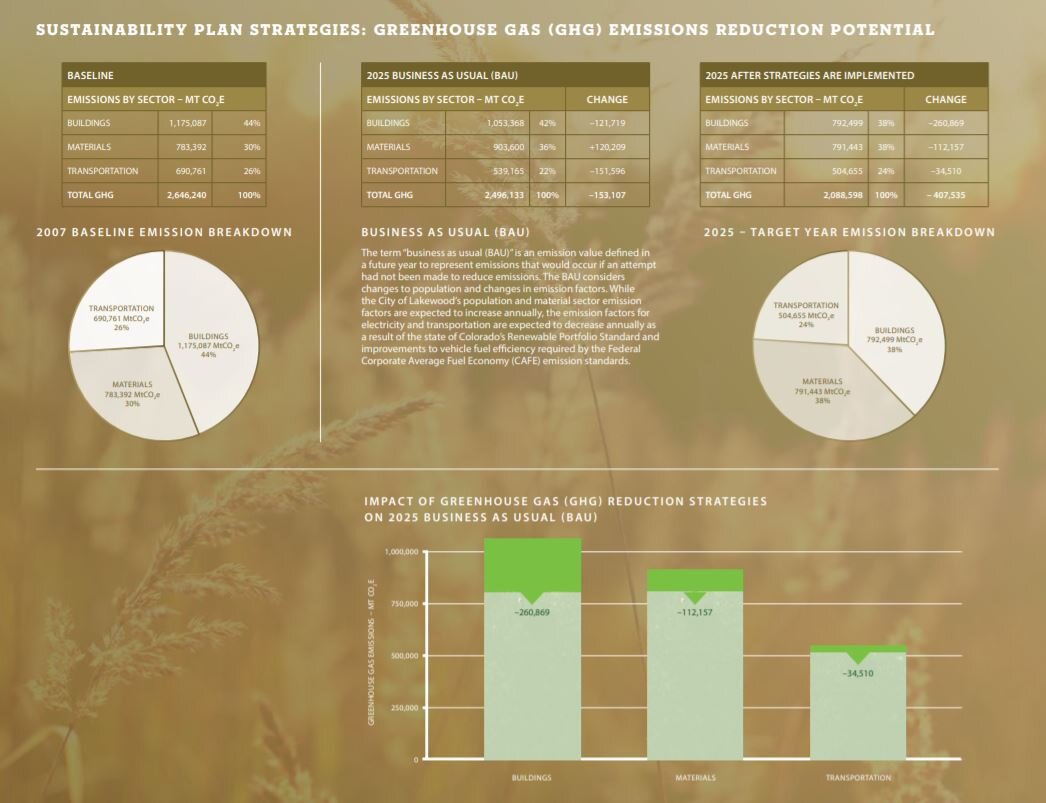
In 2018 The City of Lakewood requested assistance from Lotus to evaluate the GHG emission reduction potential for each primary strategy and to qualitatively rank the potential reduction impact for each secondary strategy. This effort provided the City data to vet improvement strategies and to develop GHG emission reduction targets. From this effort the City was able to work towards achieving the following goals:
Understand GHG emission reduction potentials for all identified improvement strategies.
Become familiar with gaps in existing data.
Understand which factors influence GHG emissions and which metrics can be used to track GHG emissions.
Be prepared for future sustainability planning efforts, such as a revised GHG inventory, initiatives to capture missing data, and a GHG emission dashboard.
In 2015 Lakewood selected Lotus to help develop Lakewood’s first comprehensive municipal operations greenhouse gas emissions inventory and other related deliverables to set them up for a municipal decarbonization planning project. The goal of this effort is to establish a 2024 greenhouse gas emissions baseline. Additionally, Lotus identified long-term, municipal GHG emission reduction targets and developed, modeled, and forecasted reduction strategies. Finally, Lotus outlined a process for City staff to update the inventories and track progress towards climate goals in future years. The final report for the City took the form of a StoryMap, which includes an emissions dashboard, to present to the public the important work that the City is doing in the sustainability space.
“As part of Lakewood’s Sustainability Plan development process, we realized the value of measuring the plan strategies’ potential to reduce greenhouse gas emissions. Emily Artale at Lotus Engineering and Sustainability provided the exact service we needed through a collaborative process and an extensive analysis. Her work will allow Lakewood to determine how we can meet our greenhouse gas reduction targets and become a more sustainable community.”
Alpine Bank | Annual Sustainability Audit

Annual sustainability audit
Lotus has been collaborating with Alpine Bank since 2014 to help maintain and update Alpine Bank’s Utility Tracking Database on an annual basis, calculate emissions from facilities, and normalize energy use for the weather.
Lotus performs a quality check on Alpine Bank’s energy and water use tracking spreadsheet. The tracking spreadsheet has records of monthly electricity, natural gas, and water usage at all of Alpine Bank’s locations across the state of Colorado. Once a quality check is completed, Lotus reviews the results and errors found with the project team at Alpine Bank. Finally, Lotus writes a section reviewing the emissions and activity data trends across the organization to be included in the annual report.
“Hillary was tasked with creating a new Excel-based tool that empowered Alpine Bank’s energy managers to normalize energy data for weather from 2006 moving forward. The tool, which was designed to complement our internal energy tracking spreadsheet system, not only enables us to better understand our energy usage across our 38 locations but also helps us meet ISO 14001 goals, the results of which are published in our annual Environment Report. We continue to rely on Hillary as a key technical resource for various Alpine Bank sustainability initiatives. We highly recommend Lotus’s services for comparable projects.”

Alterra Mountain Company | GHG Inventory and Sustainability Strategies

GHG Inventory and Sustainability Strategies
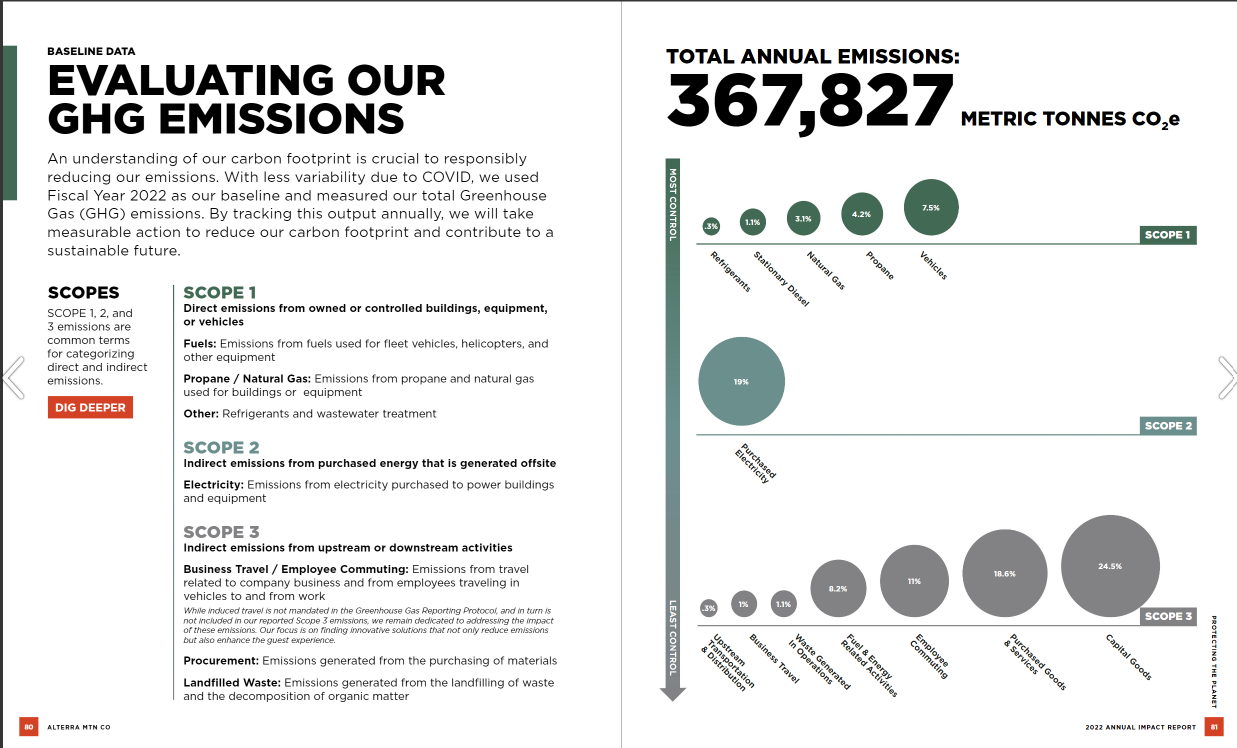
Lotus developed greenhouse gas inventories for the 16 resorts owned by Alterra, Canadian Mountain Holidays, Alpine Aerotech, and Alterra’s Denver headquarters. Included in this was a detailed analysis of the emissions impact of visitor travel to the resorts. Lotus partnered with McKinstry to develop specific climate action strategies and an interactive Storymap detailing the results and recommendations. Lotus is currently updating the induced travel analysis for the latest fiscal year.
“Alterra Mountain Company is one company of many unique brands, and Lotus embraced the challenge of working effectively within our organizational structure. For each destination in the Alterra portfolio, the Lotus Team developed custom greenhouse gas inventories and inventory management plans using diverse data inputs. They synthesized complex data sets into manageable workflows that could be easily explained and replicated year over year. Guided by the incredible body of work from Lotus, we have been able to prioritize data-based actions that maintain the unique character of each destination and community, advance climate action policy, and aggressively reduce emissions. We are incredibly grateful to work with the Lotus Team and highly recommend them to other clients, especially those with complex operations.”

Boulder County | Net Zero Codes Cohort
Lotus provided project management and facilitation for the Boulder County Net Zero Codes Cohort, later renamed to the Northwest Metropolitan Regional Energy Code Cohort. The project included two phases: the first reviewed and adopted the 2021 International Energy Conservation Code (IECC) with regional consistent strengthening amendments, and the second created a regional roadmap for reaching 100% net zero new construction by 2030.

Phase 1
For Phase 1 of the project, Lotus facilitated a series of five meetings with eight community partners in the Northwest Metropolitan region of Denver to co-create consistent energy code amendments that could be adopted alongside the 2021 IECC to support local and regional climate goals. Equity, GHG reductions, and the needs of individual communities were discussed within the cohort while the group reached a consensus for the recommended code package. Phase 1 included code package development along with individualized community support to help each partner community with their code adoption process. Lotus worked with consultant partners Southwest Energy Efficiency Project (SWEEP) and Shums Coda throughout the project to develop the code package for the region along with supporting materials such as fact sheets, customized presentations, training materials, and other individualized support requested by each community. Lotus and the consultant team attended council meetings and study sessions with staff to ensure the code package was understood and could be adopted by each leadership council. The results of Phase 1 code adoptions for the region can be seen in the table to the left (as of February 2023).

Phase 2
Phase 2 of the project began the summer of 2022 with a goal of creating a roadmap of ranked local, achievable, affordable, and equitable policies and strategies to reach the goal of net zero new construction by 2030 for the region. For Phase 2, Lotus facilitated a series of eight meetings with ten communities to co-create a regional definition of “net zero new construction,” as well as a roadmap with a stepped approach to achieving net zero new construction by 2030. Equity and regional collaboration were strong themes throughout the discussions and the roadmap. The roadmap was written and designed by Lotus, with support from SWEEP and Shums Coda, and lays a foundation for continued regional coordination on future building code updates for each community involved.
The Boulder County Net Zero Code Cohort was funded by a Department of Local Affairs grant and created a framework in the state for regional collaboration on building codes which has been deployed in other areas of Colorado to support local communities with building code adoption.

City of Boulder | City of Boulder Annual GHG Emissions Inventories (Community and Municipal)

City of Boulder Annual GHG Emissions Inventories (Community and Municipal)
Lotus completed the City of Boulder’s community and municipal GHG inventories in 2012, and from 2015 through 2022. Since 2016, Lotus has been preparing the city of Boulder’s community GPC-compliant greenhouse gas emissions inventories. Lotus develops community and municipal GHG inventories in separate Excel-based tools which include information regarding data sources, documentation of calculation methodology, and easy-to-digest data visualizations communicating inventory results. Lotus also writes final reports for the community and municipal inventories for Boulder. Lotus updates the inventories each year and in 2018, started updating the municipal GHG emission inventories. In 2018, Lotus also provided the city with an infographic describing the results of the city’s 2018 GHG emissions inventory for use by the city’s residents.
New 2023 GHG inventory results published in Winter 2024 report that Boulder achieved an impressive 24% reduction in GHG emissions since 2018. The community continues to see declining GHG emissions as they make progress towards a resilient and sustainable future. The City’s GHG emissions reduction work has been highlighted by the press:: City of Boulder News, CBS News, Daily Camera Press Release.
“The Lotus team are greenhouse gas accounting wizards! The City of Boulder has been working with Lotus on our community and municipal GHG inventories for multiple years now, and we are endlessly impressed by the engaging, knowledgeable, helpful, and reliable team that always delivers on quality, accuracy, and customer service. The Lotus team is such a pleasure to work with and their passion and commitment to the work is evident, always seeking to find solutions to meet unique needs or requests as they arise.”

City of Colorado Springs | Sustainable COS Plan
Lotus supported the development of Colorado Springs’ first Sustainability Action Plan. This data-driven and community-focused planning effort involved the integration of the City’s first community-wide and municipal greenhouse gas emissions inventories, the analysis of current and past planning efforts in the City and region, and the engagement of a wide network of Colorado Springs’ staff, stakeholders, and partners to identify measurable and actionable strategies and actions that the City can take to enhance sustainability across the community. Equity considerations were woven throughout the process, with specific strategies and actions focused on improving access to resources and forthcoming development opportunities in disproportionately impacted communities across Colorado Springs. The final plan was a graphically designed document that informs the City and its partners on the work to be done over the next 5-10 years. In 2023 Lotus will be completing emissions strategy modeling to determine the greenhouse gas emissions impact of the strategies within the Sustainability Action Plan.
The Sustainability Action Plan focuses on ten sustainability elements:
Equity
Agriculture and Food Availability
Natural Environment, including ecological health, water, and air quality
Built Environment
Energy
Materials Management
Transportation
Economic Development
Health and Well-Being
Arts and Culture.
Lotus facilitated focus groups for each of the 10 elements to help draft the narrative that will be integrated into the City’s Plan.
