

City of Louisville | Commercial Energy Code Review

The City of Louisville contracted with Lotus and Group14 Engineering to explore updates to the City’s current commercial energy code that would help the City reach its energy efficiency and greenhouse gas reduction goals. The City and consultant team examined commercial energy code policy options including higher efficiency requirements, all-electric requirements, and net zero requirements. The scope of work included:
Energy modeling of current code-compliant heating, ventilation, and air conditioning systems in commercial and industrial building types to evaluate upfront cost, operational cost, and greenhouse gas (GHG) emissions. The energy modeling also included an analysis of the total solar PV required to make code-compliant buildings (both mixed-fuel and all-electric) net zero. Finally, energy modeling was conducted to analyze the upfront cost, operational cost, and GHG emissions savings of buildings built to a higher efficiency performance standard.
Research on existing commercial energy code policies from around the country.
A public engagement process that solicited feedback on commercial code policy options via two City board meetings, two open-house style community meetings, and an online public engagement survey.
Final report summarizing the policy recommendations from the consultant team and staff for the City of Louisville’s commercial code update.
Lotus facilitated the public engagement process, developed the final policy recommendation report, and presented the final policy recommendation to City Council for adoption. We are well-versed in the analysis of various commercial code options that will allow a community to move easily to a net zero code standard.


City of Commerce City | Sustainability Action Plan

Lotus led the development of sustainability and community health recommendations that are woven into the first Sustainability Action Plan for Commerce City, Colorado. An environmental justice priority community, the City wished to ensure that recommendations were derived from community input and informed by data. Lotus facilitated a citizen-led Environmental Policy Advisory Committee to develop recommendations that will result in a healthier, more sustainable community. Additional community outreach occurred in the form of community meetings, civic engagement training, a community survey, and workshops with City staff and business and industry leaders. As part of the process, Lotus also completed the City’s first GHG inventory and business-as-usual forecast, modeling the GHG impact of strategies, identified the cost impacts of strategies and funding resources, and met with City staff to develop internal sustainability recommendations. Subcontractors on the project analyzed and made recommendations specific to air and water quality issues in Commerce City, which were woven into the full recommendations report.
In addition to completing the City’s first community-wide greenhouse gas emissions inventory as a part of the Sustainability Action Plan development, Lotus developed the City’s first municipal operations greenhouse gas emissions inventory. Lotus utilized the Local Government Operations Protocol to complete the inventory. The development of this inventory will help the City government create and monitor sustainability actions outlined in the Sustainability Action Plan. Lotus continued supporting the Commerce City Department of Energy, Equity and the Environment with facilitation of the Environmental Policy Advisory Committee and designing program collateral for one year after the plan was finalized.
“Commerce City unanimously passed a Sustainability Action Plan which was the culmination of input from multiple community and business meetings. Lotus was instrumental in facilitating the process as well as preparing technical documents such as an Air Modeling Threshold Report; Greenhouse Gas Inventory and Stormwater Management Plan. The Sustainability Action Plan was translated into Spanish for increased stakeholder engagement. Lotus has provided outstanding service””

City of Golden | Codes Consulting: Building Policy Roadmap
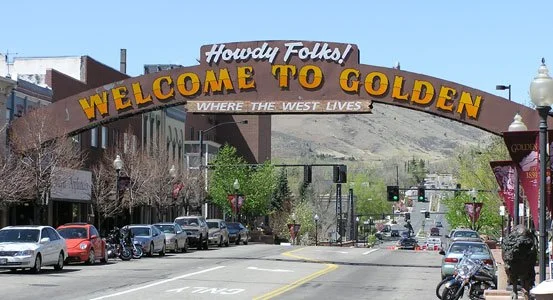
Lotus developed the City of Golden’s Code Roadmap after the completion of the City of Golden Code Consulting Project as a joint effort with Iconergy Ltd. The roadmap lays out the recommendations and timelines to address greenhouse gas emissions and energy efficiency in the City of Golden’s built environment, with the ultimate goal of helping to achieve the City’s 2030 Sustainability Goals. The recommendations for new and existing buildings were informed by a series of stakeholder workshops which included industry experts, sector representatives, and consultants that evaluated a total of six code packages from January to July 2022. Lotus was the primary facilitator for each stakeholder workshop and worked with the group to review code standards the City could consider to meet its building goals.
The final recommendation for building code and existing building policy, derived from the stakeholder process, included the following high-level directives.
For new buildings, adopt the 2021 IECC and the New Buildings Institute (NBI): All-Electric Code Overlay with a requirement for onsite PV for new residential construction.
For existing buildings, develop a building benchmarking program and subsequent performance standard for existing buildings and address code and incentive gaps for existing buildings with expanded programming and incentive opportunities.
The Lotus team facilitated the stakeholder workshops and provided technical assistance in analyzing code packages, GHG emissions, and strategic planning to meet Golden’s GHG reduction goals.

City of Las Cruces | GHG Inventories & Climate Action Plan

Lotus completed the City of Las Cruces’ 2018 GHG inventory and supported the development of GHG strategies to reduce emissions to 80 percent of 2018 levels by 2050. This work included the development of both a community and municipal inventory, in-person and remote stakeholder facilitation for two workshops to select GHG reduction strategies with a focus on equity and resilience, high-level modeling of strategy impacts, and drafting the final plan.
The inventory and strategies will help the City to understand its carbon footprint, identify and implement ways to reduce its carbon footprint, gain community buy-in, and inform future policy and programs.
In 2024, Las Cruces contracted with Lotus to update the City’s business-as-usual GHG emissions model as well as to complete calendar year 2023 greenhouse emissions inventories for the community and local government operations.
In addition to these updates, Lotus created several charts to help Las Cruces check in on their progress towards the emissions reduction goals outlined in their Climate Action Plan. These charts compared the business-as-usual emissions projection, current emissions trajectory, and emissions reduction goal for each sector. Lotus also created charts that highlighted standout trends in the inventory data; these charts helped communicate notable data trends to the public.
“The Council was so impressed with Lotus’ work - the report, the strength of the data, and the equity-centered approach. I will be putting forward the 9 strategies, targets, and co-benefits to adopt as a resolution. The actions in the CAP will be used as a foundation for deeper dives so I can get even more community involvement”

City of Longmont | GHG and Related Projects

Lotus has worked on multiple projects with the City of Longmont:
To support the City’s commitment to regularly update their greenhouse gas emissions (GHG) findings, Lotus completed a GHG inventory for the City in 2016. Lotus has calculated Longmont’s greenhouse gas (GHG) emissions inventories since 2018. Lotus built upon this work again in 2019 for an updated inventory, as well as modeling for new construction building electrification.
In 2023, Lotus worked with Longmont to write and design a GHG memo that not only told the story of the data, but also connected it to other sustainability efforts at the City. The memo was designed to captivate and inform a diverse audience. Lotus worked with the City to make the document accessible for all readers.
Lotus is currently working on updating and simplifying the current GHG reduction strategy model with more recent emissions factors, data inputs, and updated targets that align with the City’s Climate Action Recommendations Report and the recent transportation plan.

City of Longmont | Building Electrification Plan
Lotus convened and guided an Electrification Feasibility Committee to explore advantages and constraints of electrification policies and program options for the City of Longmont. Lotus also created a communications strategy and the development of a thoughtful, equitable, and phased beneficial building electrification plan that was both ambitious and realistic. Strategy development was supported by modeling completed by Group14 Engineering. The final Beneficial Electrification Plan provides Longmont with a roadmap of specific strategies and actions that can be taken to spur investment in electrification throughout the community.

Colorado Clean Energy Fund | Impact Evaluation Tool and Tool Updates

Lotus conducted an evaluation to understand the impacts of Colorado Clean Energy Fund (CCEF) funded projects on reaching the fund’s goals of mitigating climate change, advancing environmental and economic justice, and creating a healthier and more resilient Colorado. Lotus identified key impact metrics for CCEF including energy generation and use, greenhouse gas emissions reductions, cost savings, and equity metrics. These metrics were incorporated into an interactive evaluation tool which calculates impacts for individual projects and all projects together. The tool was developed to allow CCEF to enter any new projects and estimate energy impacts of different project types such as energy efficiency, equipment electrification, and electric vehicle charging infrastructure.
Lotus also provided recommendations for improving data collection to ensure CCEF can continue to measure project impacts for all future projects.
Lotus worked with CCEF to update the evaluation tool to account for new residential programs offered by CCEF. This work entailed developing an API connection between CCEF’s customer relationship management system (Zoho) and the evaluation tool. This connection allows CCEF to import large numbers of residential projects into the tool without the need for manual data entry. Lotus then created program specific impact calculations that aligned with the metrics created in the original tool. The resulting updates allow CCEF to quickly import large batches of projects to the evaluation tool and automatically calculate impact metrics for all projects.
“The Lotus Engineering & Sustainability team developed a comprehensive, easy-to-use impact measurement tool for the Colorado Clean Energy Fund (CCEF). The entire engagement with Lotus was well-organized and cost effective, and we were amazed by how sophisticated the end product was. Thanks to the tireless effort by the team at Lotus, CCEF is now able to efficiently track and calculate its economic, environmental, and social impact across its portfolio. CCEF could not have achieved this without the help of Lotus!”

Colorado Energy Office | Building Performance Standard Task Force Facilitation

Lotus facilitated monthly meetings with the State of Colorado Building Performance Standard (BPS) Task Force and ensured that the Task Force remained focused on the equitable impacts of the BPS on communities, building owners (especially for affordable housing), and Colorado’s workforce. Through the Task Force meetings, Lotus guided the task force through technical discussions and decisions and brought forward data to support decision-making. Lotus also completed an analysis of available benchmarking data to guide the Task Force conversations from a technical perspective, as well as designed a Public Engagement Plan and process that included a focus on gathering input from representatives across the State that can speak to the equity and workforce impacts of the BPS.
The Public Engagement Plan guided the outreach and engagement activities that were used to gather input from a broad network of stakeholders and interested parties from outside the Task Force. This included identifying the key audiences and ways to engage them, the community and business organizations that would be able to funnel input from their members, and developing a survey, public outreach materials, and designing and supporting the facilitation of three public engagement sessions.
The Task Force recommended that the State include a holistic approach to implementing the BPS that includes creating programs that would provide support and resources for the Colorado workforce, and to assess equity concerns for tenants, disproportionately impacted communities, and others who may be adversely impacted by the BPS requirements. Lotus then worked with the Colorado Energy Office to design an Equity Priority Building Approach. Lotus’s recommendations reflect the integration of an equity lens with BPS and ensure the ongoing clean energy transition is accessible to all. This means considering the community, the building itself, and the building’s occupants, as well as how to reduce the burden imposed by the State BPS program and the risk of displacement or gentrification. Important in this equity approach is giving building owners a voice in the process by allowing a building to self-identify as an EPB.

Colorado Energy Office | Energy Code Board
Phase 1
Lotus contracted with the Colorado Energy Office (CEO) to facilitate the State’s Energy Code Board to create a Model Electric and Solar Ready code for the State of Colorado. A House Bill passed in the State’s legislature in 2022 requiring the Energy Office to convene an Energy Code Board with diverse representatives from across the state to develop a model code to be the new state minimum code in conjunction with the 2021 International Energy Conservation Code.
Lotus managed the code development process and facilitated the Energy Code Board (board), and an executive committee through a series of 18 meetings to discuss, deliberate, and finalize each code element within the State’s model code. Lotus conducted research on existing electric-ready, solar-ready, and EV-ready codes in the State, drafted the code elements for board review, facilitated an ongoing public engagement process that culminated in a live public comment session, and wrote the final Model code for the State based on the outputs of the facilitated process. Cost-effectiveness was a critical component of the readiness code discussions and Lotus pulled and summarized reports for the board to advance their understanding of the upfront and retrofit costs for electrification, EV charging, and solar installations. Finally, Lotus executed a voting process for all board members that was efficient and transparent to the public and produced the final code package for the State.
Lotus wrote the State’s Model Electric and Solar Ready Code, which is an immediately adoptable code standard for Colorado communities. In addition, Lotus developed an explanatory code package to help guide communities through the review and adoption of the code, and a final code report to provide an overview of the process and key elements of the Model code. Throughout the process, Lotus maintained strict adherence to the Colorado Open Records Act as well as, timeline and procedural requirements mandated by the House Bill.
Phase 2
The Energy Code Board reconvened in 2024 to fulfill the 2nd part of the legislation that formed the board to create a Low Energy and Carbon Code for the State of CO. This code will be the new State minimum energy code, starting July 1, 2026. The new State minimum energy code will be based on the 2024 IECC which was recently released publicly.
Lotus is facilitating the Board process and providing technical support, code drafting and review with support from Group14 and Shums Coda. Lotus is also organizing and facilitating an equity committee for the State Code Board to ensure the final code advances equity and minimizes unintended consequences.
The Low Energy and Carbon Code will be published in September of 2025. Communities, organizations, companies, etc across Colorado have the opportunity to weigh in on the process the Code Board ultimately builds. Colorado professionals and community members can submit comments at any time to the Board using the online comment form. In addition, the public will have two opportunities in 2025 to review and provide input on the draft code language. The first public comment period and draft code will be available in early January 2025, and the second in early April 2025.
Those interested in learning more about the Energy Code Board work or discussions to date can find more info on the CEO's website. Meeting notes and recordings are publicly available for review on the site along with comments and code proposals from the general public submitted to date.
“I truly can’t find the words to express how much I appreciate the work you all have put into this project over the past several months. I know that there have been a number of late nights and weekends spent on this project (as well as just long days in general!) and I want you to know how much it meant to me, and CEO broadly, knowing I had all of you that I could trust to get everything done well and on time while I was trying to juggle what felt like a million other things. I can’t tell you how many compliments I received from Board members, other CEO and agency staff, and members of the public on the incredible job you guys did managing this wild process and keeping the Board on track to meet its goals and deadlines. Seriously, it was a lot. So I just wanted to say thank you again for everything, and I look forward to getting everything done in the coming couple of months! This code is a pretty monumental step forward for Colorado and will have a lasting impact that we can all be very proud of. ”

Clear Creek County | Vehicle Electrification Plan

Vehicle electrification plan
Lotus lead the community engagement tasks for Clear Creek County, Colorado, and their Vehicle Electrification Plan. We created and disseminated a community survey to gather information about EV use and barriers to adoption. Our team also conducted 12 informational interviews with stakeholders across the spectrum from community leaders to the local utility. We convened one focus group to vet and confirm the data collected from the community, as well as co-create the strategies for the County’s EV readiness plan. Lotus then prepared a report detailing the results of our engagements with a clear description of the barriers to EV readiness in the community and many solutions to address those barriers. An important aspect of this project was our focus on the impacts of EVs on underserved communities. We made several key suggestions to address EV equity throughout the community in our report.

Colorado Energy Office | Rebuild, Re-energize, Recover Colorado
Lotus worked with the Colorado Energy Office (CEO) to complete an ArcGIS StoryMap website titled Rebuild, Re-energize, Recover Colorado. This website provides an overview of climate action work across Colorado and provides communities with resources to get started on taking climate action now. Check out the map below of large emitting facilities in CO. Click the +/- to zoom in and out, and click on the circles to find out more information on the facilities including which coal-fired power plants are closing in the next 10 years.
Lotus has conducted research focused on the financial, legal, technical, and communication barriers that are currently hindering the expansion of energy performance contracting in rural and small communities while creating a new approach that utilizes local and international best practices. Additionally, Lotus has evaluated low-income Community Solar Demonstration projects and their impact on energy burden, approaches for replicability, and overall effectiveness of reducing the energy burden. Lotus has worked closely with the CEO on energy performance contracting.
Here are some links to specific case studies: Delta-Montrose Electric Association, Empire Electric Association, Fort Collins Utility, Grand Valley Power, Holy Cross Energy, San Miguel Power Association, and Yampa Valley Electric Association.
Additional projects include the analysis of the Fulfillment of the Low-Income Carve-Out for Community Solar Subscriber Organizations and Accelerating EPC in Small and Rural Colorado Communities.
“Hillary’s ability to simultaneously manage project deliverables and keep team members on task while exercising her creativity to develop new programs is a unique skill set. Hillary knows how to manage and motivate to get the best out of her clients and collaborators. She is a delight to work with and will see any project through to a successful conclusion.”
“Emily was instrumental in the success of our (Colorado Energy Office) Energy Management Assistance Program. She provided key technical support to Colorado K-12 schools and her work lead to measurable energy savings and environmental benefits for program participants.”

Colorado Resiliency Office | Website and resilience Prioritization
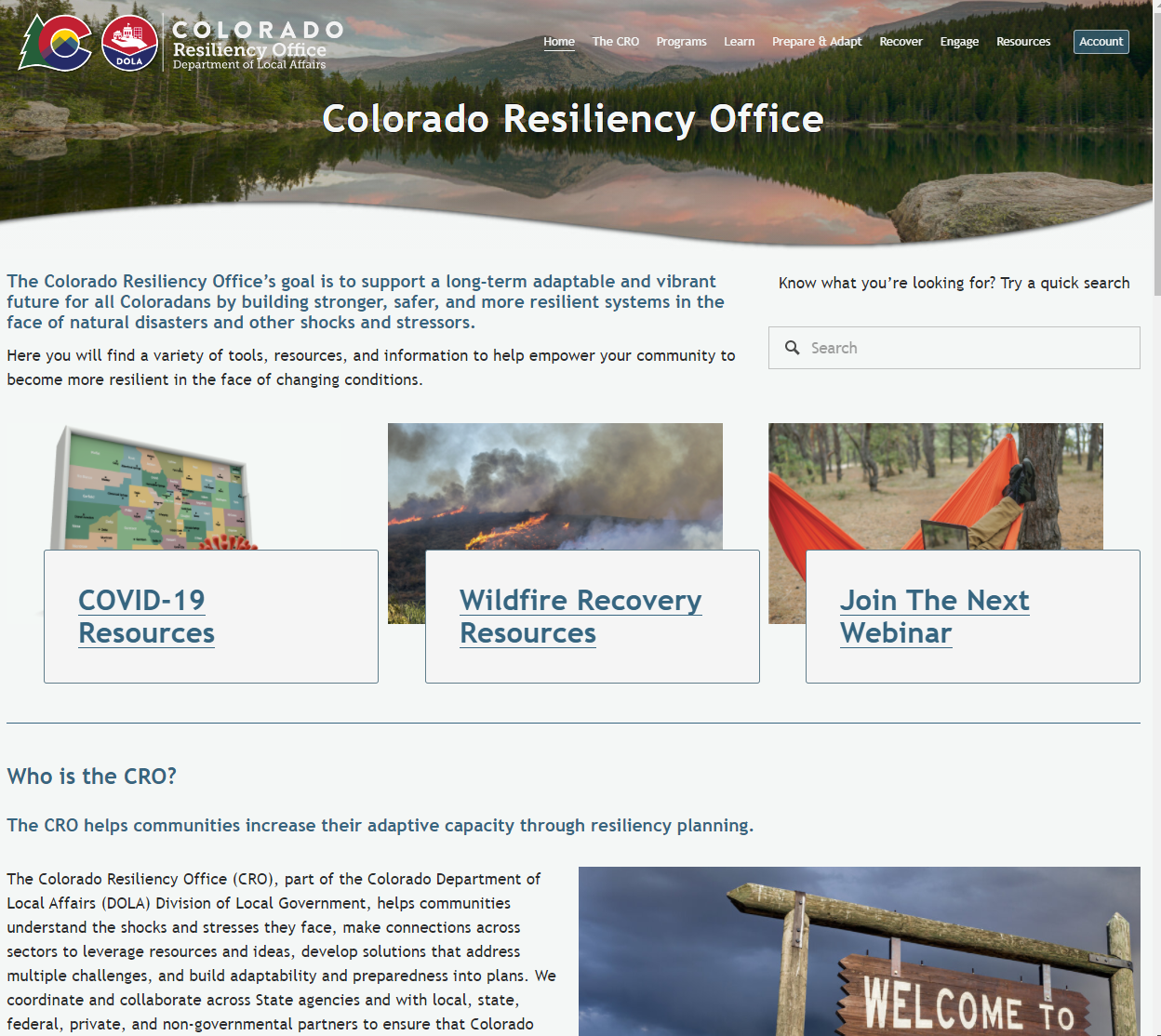
Lotus worked with a team of experts on behalf of the Colorado Resiliency Office to create an interactive website that helps communities understand the shocks and stresses they face, make connections across sectors to leverage resources and ideas, develop solutions that address multiple challenges, and build adaptability and preparedness into plans. As part of the project, the team created multiple toolkits and resources for communities to help proactively prepare for and adapt for changing conditions. Also, best practices on how to meet immediate, short-term, and long-term recovery needs in the aftermath of a disaster.
In 2024 Lotus developed a list of local government adaptation and resilience actions and prioritized actions based on the relevance and impact for Colorado, with documented justifications. Lotus also provided guidance for the top-prioritized adaptation and resilience actions. Lotus synthesized input and feedback from multiple stakeholders as well as other state programs to develop recommendations for next steps based on research and outreach.
“I had the pleasure of recently working with Lotus Sustainability on a project to develop a new website and tools for Colorado communities to plan for long-term resiliency and recovery. Lotus’ expertise and leadership ensured that our final products were both technically sound and useful to our audience. Throughout the project, Lotus remained flexible and adapted to our changing needs.”

CORE GHG Inventories and Regional Summaries

Lotus is completing Pitkin County and the Roaring Fork Valley’s GHG Inventories and regional summaries; this includes inventories for the City of Aspen and Towns of Basalt and Snowmass. The work is supported by the Community Office for Resource Efficiency (CORE). Building off each communities’ past efforts, Lotus will help them determine how they are progressing towards their emission reduction goals. A data dashboard will provide the opportunity for the community to view emissions from different sectors, sources, and geographies.

Denver Public Schools | Climate Action Plan

climate action plan
Our work supporting Denver Public Schools and their students was highlighted by Former Vice President Kamala Harris as a model for others to follow.
Lotus worked with Denver Public Schools (DPS) to develop new goals and programs focused on GHG emissions reductions, renewable electricity, environmental justice and education, and resource management. The plan was co-created with DPS stakeholders and included a strong focus on equity and accessibility as well as a fun, interactive, and engaging process. The new plan outlined a roadmap for achieving the goals laid forth in the recent DPS Climate Change Resolution. These goals included reducing greenhouse gas emissions by 90 percent of 2010 levels by 2050, prioritizing sustainability actions in schools and communities facing greater environmental injustice, and making sustainability a core value of DPS. Lotus also fully reworked the DPS website to drastically increase engagement with students, staff, and general public.
Lastly, Lotus created a program to help empower students to lead this effort to ensure that this work continues long after we are gone.
Lotus developed comprehensive GHG emissions inventories for DPS operations for fiscal years 2016 and 2021. Emissions from building operations, vehicle fleet, business travel, employee commuting, waste, and purchased goods were quantified in this analysis. These inventories highlighted changes in emissions over time, identified key sources to target for reductions, and provided key data for DPS to track metrics and goals.
You can view the plan in Spanish here. Este plan es disponible en español AQUI.
“Lotus was pivotal in supporting us in the creation of a transparent, clear, and relatable climate action plan that will engage our greater community for years to come. Their ability to engage our stakeholders throughout the development was invaluable.”
“Vice President Kamala Harris says Denver students’ climate plan is a model for others to follow.”

Eagle County | Resiliency Plan

Lotus led a stakeholder engagement process to support the development of the Eagle County Resilience Framework. This process included background data collection, hosting several informational interviews, convening a Resilience Working Group, and hosting two workshops to understand and develop overarching strategies to address and enhance resilience and vulnerability across Eagle County. Workshops and engagement sessions were designed to ensure a diverse representation of the community could make their voices heard in the planning process, and considerations of equity were an integral part of the engagement process and plan outcomes. The final Eagle County Resilience Plan exists as a project website to guide implementation work over the years to come. Lotus subcontracted to Adaptation International on this project; Adaptation International developed the final project website.
“On behalf of our team, the RWG [Resiliency Working Group], and our community, I wanted to thank you for a great workshop this morning. I thought the presentation info and dialogue was excellent and exceeded my expectations for the work we would accomplish for the event”

Eagle County | Code Cohort

Lotus provided project management and facilitation for the Eagle County Code Cohort. The project included the facilitation of three meetings with representatives from each Eagle County jurisdiction to create a set of above code standards—including solar-readiness, EV-readiness, and electric-readiness—that jurisdictions could adopt alongside the 2021 I-Codes, specifically the 2021 International Energy Conservation Code (IECC). Equity, GHG reductions, and the needs of individual communities were discussed during the cohort meetings and a consensus was reached for the recommended code package.
The cohort included code package development and individualized community support to help each partner community with its code adoption process. Lotus worked with consultant partners Southwest Energy Efficiency Project (SWEEP) and Mozingo Code Group throughout the project to develop the code package for the region. The consultant team developed supporting materials such as fact sheets, customized presentations, training materials, and other individualized support requested by each community. Lotus and the consultant team attended council meetings and study sessions with staff to ensure the code package was understood and could be adopted by each leadership council.
Finally, Lotus facilitated a public engagement process for the new code package which included an informational webinar and community survey to understand community concerns and support for the new code package.
Below is a presentation about this project from the Mountain Towns 2030 conference in 2023.

Eagle County | Building Code Energy Modeling & Upfront Cost Analysis
In 2022, Lotus supported Eagle County in analyzing new construction code packages with electrification amendments to provide energy use and cost data which will be used to inform the County code update process in 2023. Lotus analyzed four code package options as they compare to Eagle County’s current new construction energy code, the 2015 International Energy Conservation Code (IECC). The code packages were evaluated by
Upfront cost impacts,
Greenhouse gas (GHG) impacts over the lifetime of the building, and
Operational energy cost impacts over the lifetime of the building.

The code packages investigated in this study included the 2021 IECC without amendments, the 2021 IECC with an electric-ready amendment, the 2021 IECC with an electric-preferred amendment, and the 2021 IECC with an all-electric amendment. These code options were analyzed for single-family homes, multi-family complexes, and commercial properties.
Lotus completed building energy modeling for each building type and code standard to provide data on energy use, energy cost, and GHG emissions over the lifetime of the buildings. To accompany the energy modeling Lotus conducted a literature review of existing building code cost studies to synthesize the upfront cost impacts of each code package option. The energy modeling and literature review results were summarized in a report and presentation for the Eagle County Resiliency department. The results will support Eagle County in their next round of code adoption to help push the community towards a more sustainable building code.
The scope of work consisted of:

Upfront Cost Analysis: A literature review of existing studies analyzing the cost impacts of updating energy codes from prior code cycles, in this case, the 2015 and/or 2018 IECC, to the 2021 IECC. Additional studies were reviewed to understand the upfront cost impacts and cost-effectiveness of three additional above-building code standards, including electric-readiness, electric-preferred, and all-electric provisions.
Energy Modeling: Energy modeling for three building types typical of Eagle County construction: a single-family home, a multifamily building, and a mixed-use commercial building. Each building type was modeled to meet four code standards: the County’s current energy code (2015 IECC), the 2021 IECC, the 2021 IECC plus an electric-preferred standard, and the 2021 IECC with all-electric systems. The modeling was conducted to evaluate total annual energy consumption, total annual energy costs, and greenhouse gas emissions over the lifetime of the building (40-year period) to understand the emissions and cost implications of advancing to a new building code. The single-family and multifamily energy models were developed using the National Renewable Energy Laboratory’s Building Energy Optimization Tool. The commercial building energy model was developed using the Department of Energy’s eQUEST tool.
The upfront cost analysis and the energy modeling will demonstrate which code options are the most cost effective and which will have the greatest contribution to reducing greenhouse gas emissions in the County. In addition, Eagle County will be participating in a code cohort with surrounding jurisdictions to review and adopt supporting amendments alongside the 2021 I-codes. This effort will help advise Eagle County on which supporting amendments will support the achievement of their climate action goals through their next phase of energy code adoption.

Eco-Products | GHG Inventories

Since 2015, Lotus has supported Eco-Product’s with their operational carbon footprint analysis. This work includes collecting and analyzing data for greenhouse gas emissions from the headquarters’ electricity and natural gas, business travel, employee commuting, materials management, and paper consumption. David Fridland can speak to our GHG Protocol work. We have been completing their annual inventory since 2016.
Lotus has also supported the writing of their Sustainability and Impact Reports for the last four years. To do so, Lotus has conducted informational interviews with key staff members and supplementary research to draft engaging, pithy text to showcase Eco-Products’ impactful work over the year in question.
“Eco-Products engaged Lotus to calculate our 2015 operational carbon footprint. This involved collecting and analyzing data for greenhouse gas emissions from our headquarters’ electricity and natural gas, business travel, employee commuting, materials management, and paper consumption. It also entailed updating our Excel-based tracking system and incorporating data for a company we recently acquired. Throughout the process, Hillary provided helpful suggestions and options. She documented all of the changes and decisions in an organized fashion, and submitted her work promptly. It could not have gone any more smoothly, and I can’t recommend Lotus highly enough. This was Eco-Products’ first time working with them, and it won’t be our last!”

Georgia Tech | Climate Action and Sustainability Projects

The Offices of Sustainability and Innovation at Georgia Tech contracted with Lotus to review, reorganize, and rewrite their existing sustainability action plan. Lotus synthesized the existing work to identify opportunities to increase clarity and streamline the narratives, goals, and strategies while ensuring the plan connects seamlessly with Georgia Tech’s overall guiding strategic plan. Through this review process, Lotus produced a revamped and designed plan that effectively communicates Georgia Tech’s sustainability goals and forthcoming work to internal and external stakeholders.
The Georgia Tech Sustainability Team also contracted Lotus to lead the creation of a Climate Action Plan. Lotus reviewed all materials to consolidate them into one plan that connects focus areas with the existing strategic plans through the narrative, as well as designing a plan that would work in conjunction with the Sustainability Next Plan. As part of this plan, Lotus developed a business-as-usual (BAU) forecast through 2050 to show projected emission changes that are relevant to the Georgia Tech campus and population. The BAU forecast was then used to model the impacts from a list of key GHG reduction strategies.
Lotus also completed a QA/QC of Georgia Tech’s greenhouse gas inventories going back to 2008. After this work was completed, Lotus created a new GHG inventory template for the FY2022 inventory that will be used in future years.
Additionally, Lotus developed a GHG emissions reduction model that quantified the emissions impacts of strategies that would provide Georgia Tech with a pathway towards net zero. The model included strategies such as: building and district energy system electrification, building energy efficiency, fleet electrification, waste diversion, embodied carbon, on and off-site renewable energy, and commute mode shift. The model was developed as an interactive Microsoft Excel spreadsheet and was then converted into a Tableau Dashboard. This dashboard included similar user-inputs and customizability as the Excel model, allowing users to visualize how different combinations and implementation details of strategies would impact Business-As-Usual emissions. The goal of this dashboard is to serve as an educational tool for students, staff, and faculty so all stakeholders can understand what measures are needed to achieve net-zero.
“The creation of this our university strategic sustainability plan was presented with many challenges including a wide variety of stakeholders, difficult timelines, and working within state institutional regulations. The team at Lotus stepped up to each challenge and worked with our needs to create a beautiful and engaging document. We are truly proud to be able to demonstrate our commitment to sustainability efforts by sharing our plan with the campus community and with the world.”

Grand Canyon Trust Colorado Plateau | GHG Inventory

Lotus helped develop the first GHG emissions inventory and BAU projection for the Colorado Plateau. We developed a bottom-up approach to estimate overall emissions based on 64 unique municipalities, including sources such as oil and gas drilling and processing, coal mine emissions, and carbon sequestration from farming practices. The Colorado Plateau covers an area of roughly 130,000 square miles and includes portions of Arizona, Colorado, New Mexico, and Utah. Read a summary of our findings.
“Working with Lotus has been an extremely positive experience. We came to Lotus in the research phase of a large project, and they were able to take our idea and run with it. From project design, to becoming experts in the subject area, Lotus created a defensible, scientifically sound greenhouse gas emissions inventory and forecast to 2050 for the entire Colorado Plateau. They were always available to answer questions, and even conducted an in-person training to teach our team how to replicate the inventory in the future. We can’t recommend Lotus highly enough, and hope to work with them again in the future.”