

Bernalillo County, New Mexico
Bernalillo County Resilience Hubs Identification and Municipal Operations Resilience Action Plan
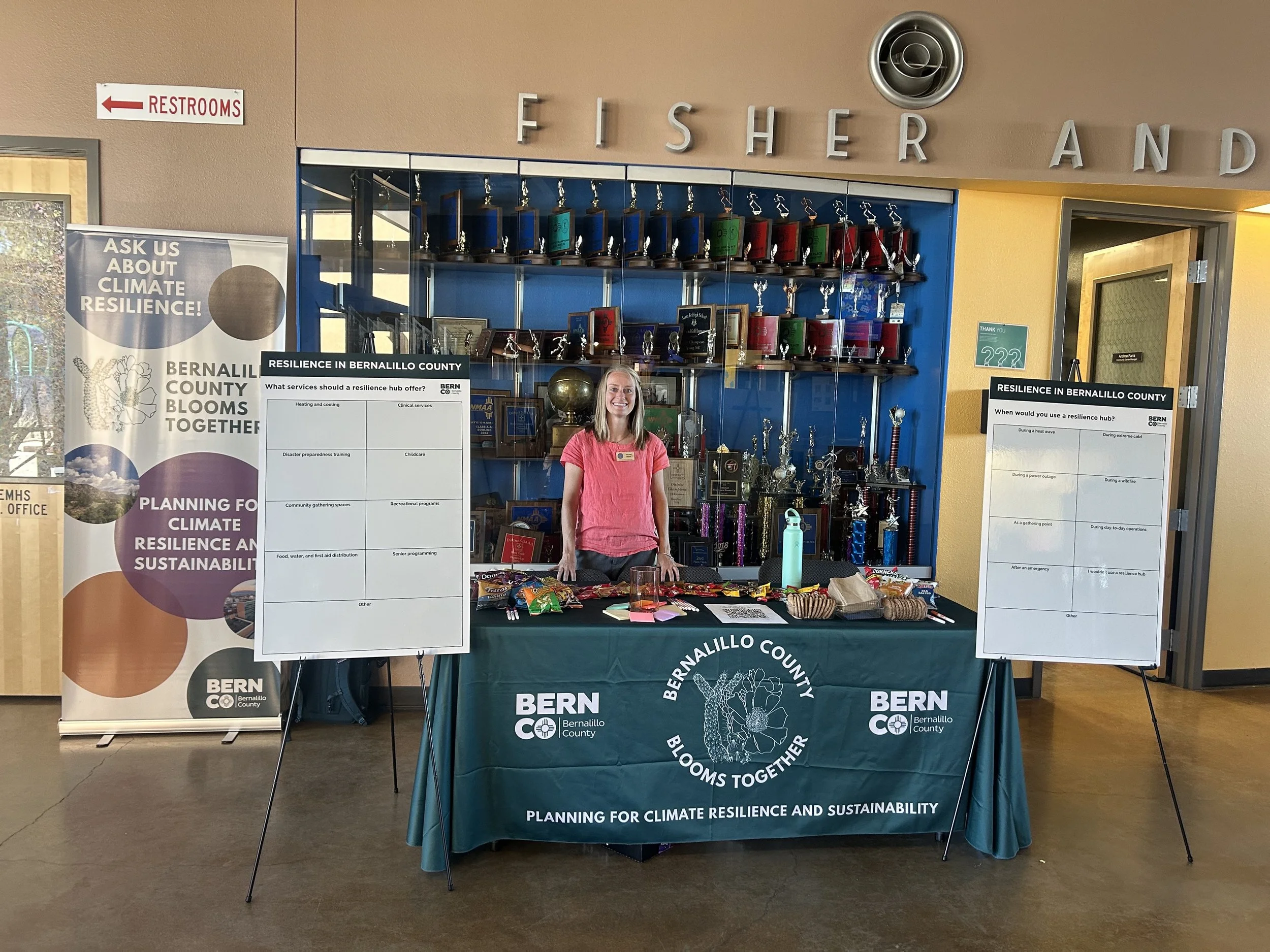
Lotus is currently working with Bernalillo County, New Mexico on several projects including identifying County owned and operated Resilience Hubs based on the following characteristics: proximity/accessibility to vulnerable communities, condition of the physical building, accessibility by multi-modes of transportation, ability to provide cooling and heating, clean air and water, and its potential for solar, storage, capacity for community members, and ADA accessibility. In addition to providing shelter and electricity, resilience hubs will be identified for their ability to be equipped with or have ready access to food, refrigeration, basic medical supplies, and other emergency supplies.
After the top facilities are identified, Lotus will be working with local Community Based Organizations to further vet the proposed Resilience Hubs for cultural and community relevance. The ultimate outcome is a roadmap that will include an overview of the review process, top sites selected and site characteristics, any gaps identified at the sites, and input from the community.
Lotus is simultaneously working with the County to create a municipal operations resilience action plan. This work includes developing a climate risk and vulnerability assessment for County operations, facilitating departmental focus groups, and developing departmental implementation plans that will ladder up to a full resilience action plan.
Town of Taos | Fractional sustainability Coordinator
Make it stand out
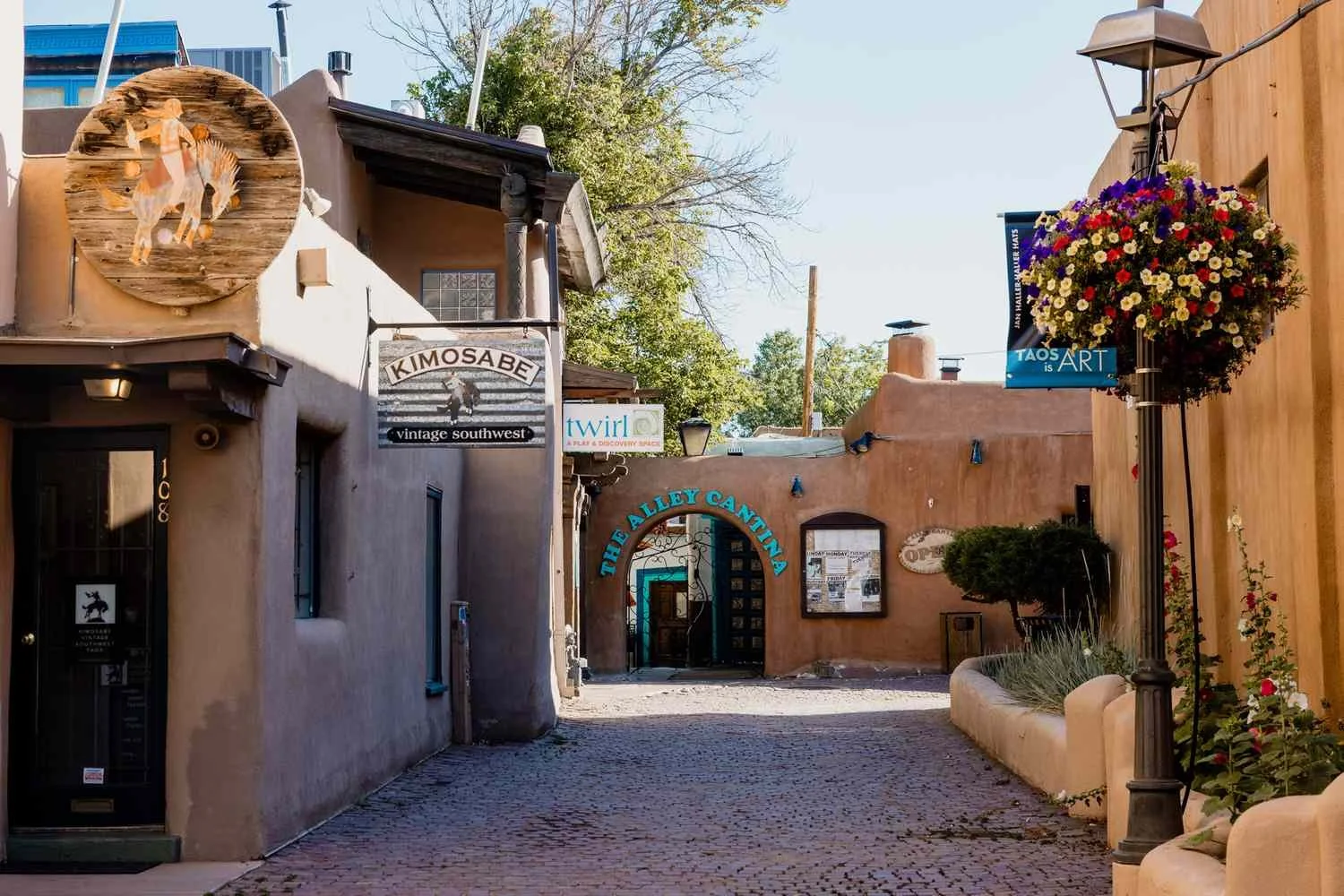
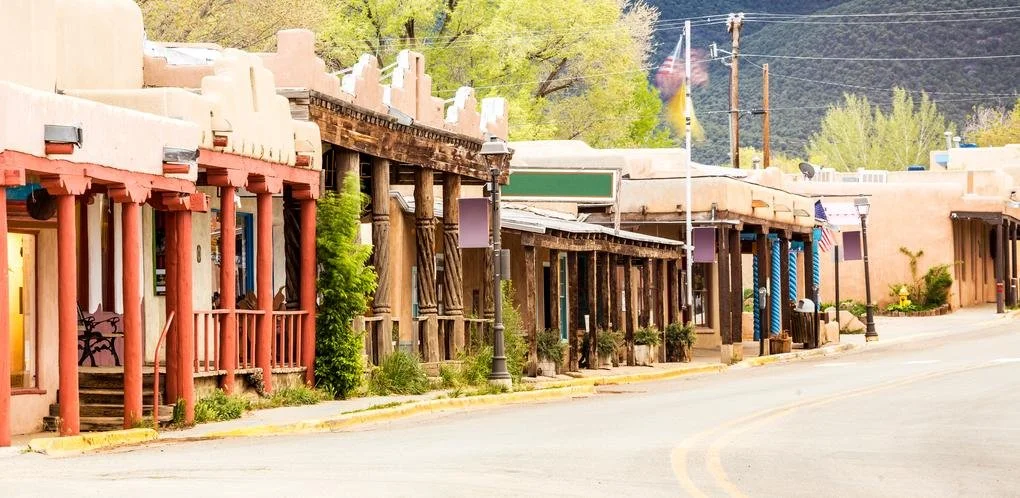
Lotus is supporting the Town of Taos as a fractional sustainability coordinator. Partnering with Lotus has provided the Town of Taos with a deep bench of subject matter experts for various sustainability initiatives. To date, Lotus has reviewed the town’s Investment Grade Audit, advised on a Water and Sewer Plan, and supported a Land Use Review Committee. Lotus has also analyzed the Town’s foundational planning documents (Comprehensive plan, Hazard Mitigation Plan, Taos Regional Water Plan, and more) to create integrated sustainability recommendations on strengthening climate action and resiliency within the town’s ongoing operations and initiatives.
The Lotus team will also deliver a sustainability framework in early 2026. The sustainability framework is designed to provide the Town with clear sustainability next steps and serve as the foundation for a sustainability plan. The project team is working to engage the community and key partners of the Town through a series of interviews and meetings-in-a-box to understand the nuances of Taos’ relationship to resilience and sustainability. The findings will be used to create a prioritization methodology by which the town can make quick decisions to address multiple competing priorities on limited resources.
The final deliverable of this scope of work is twofold. The first is a set of recommendations for planning processes to lead to more sustainable, resilient outcomes for the town through cross-sector collaboration. The second will lay the groundwork for a successful future planning process through the sustainability framework. Lotus never deploys a one-size-fits-all approach, and that has been especially helpful to Taos in staying flexible. Given Taos’ unique, complex social structure, remote location, and tourism-based economy, Lotus continually hones and adjusts the approach to meet the Town’s needs and ensure the work ladders up towards long-lasting sustainability.

Albuquerque | Climate Pollution Reduction Grant Data Consultant

Climate Pollution Reduction Grant Data Consultant
Lotus is currently working with the City of Albuquerque, New Mexico to complete several projects to support its Comprehensive Climate Action Plan (CCAP) as a part of Albuquerque’s Climate Pollution Reduction Grant (CPRG). Lotus’s scope includes the creation of a four county-wide community greenhouse gas and co-pollutant emissions inventories, a business-as-usual model, and greenhouse gas emissions reductions forecasting for all measures included in the City’s CCAP. Lotus will also support Albuquerque in developing several other deliverables necessary for the CCAP, including a workforce analysis, regular federal reporting, and a cost analysis for the measures included in the CCAP.
Albuquerque has also requested Lotus support additional CPRG-funded projects that include developing a benefits analysis, assistance with guiding a climate vulnerability assessment and tree canopy analysis, graphic design for the CCAP, and drafting educational materials for a take action campaign.
Additional scope that Lotus will provide beginning in 2026 includes developing a benefits analysis to inform the development and implementation of climate pollution reduction measures. The benefits analysis will include a climate vulnerability assessment, tree canopy model, and other relevant activities to help local governments prioritize climate action and implementation. Lotus will utilize existing data sets and models, and where unavailable, will conduct research or interviews to fill any information gaps.
For the Climate Vulnerability analysis, Lotus will summarize current risks, threats, and hazards and will detail predicted future vulnerabilities to the four counties and City of Albuquerque, including those to social, economic, environmental, and infrastructure, amongst other sectors. The full vulnerability and risk assessment will include a write-up with key takeaways.
The tree canopy model will include the identification of high-impact tree planting locations (LIDAC focus, maximizing co-benefits such as traffic calming, home energy savings, etc.). The overlay map of data will include available data such as demographic data, heat data, and transportation data down to the census block group. It will also overlay city property and parks.

City of Las Cruces | GHG Inventories & Climate Action Plan

Lotus completed the City of Las Cruces’ 2018 GHG inventory and supported the development of GHG strategies to reduce emissions to 80 percent of 2018 levels by 2050. This work included the development of both a community and municipal inventory, in-person and remote stakeholder facilitation for two workshops to select GHG reduction strategies with a focus on equity and resilience, high-level modeling of strategy impacts, and drafting the final plan.
The inventory and strategies will help the City to understand its carbon footprint, identify and implement ways to reduce its carbon footprint, gain community buy-in, and inform future policy and programs.
In 2024, Las Cruces contracted with Lotus to update the City’s business-as-usual GHG emissions model as well as to complete calendar year 2023 greenhouse emissions inventories for the community and local government operations.
In addition to these updates, Lotus created several charts to help Las Cruces check in on their progress towards the emissions reduction goals outlined in their Climate Action Plan. These charts compared the business-as-usual emissions projection, current emissions trajectory, and emissions reduction goal for each sector. Lotus also created charts that highlighted standout trends in the inventory data; these charts helped communicate notable data trends to the public.
“The Council was so impressed with Lotus’ work - the report, the strength of the data, and the equity-centered approach. I will be putting forward the 9 strategies, targets, and co-benefits to adopt as a resolution. The actions in the CAP will be used as a foundation for deeper dives so I can get even more community involvement”

New Mexico State University | GHG Emissions Inventory

Lotus completed the first greenhouse gas emissions analysis for New Mexico State University's (NMSU) main campus in Las Cruces for the 2018-2019 school year. This inventory included several scope 3 emissions sources, including employee commuting, business travel, waste, and wastewater treatment. The 2019 fiscal year inventory covered all sources of emissions generated on campus, including through the cogeneration systems within the campus facilities. NMSU was also interested in understanding what the campus' emissions were in the 2005 fiscal year. To analyze this, Lotus collected historic data from the university on energy use, campus population, and changes in buildings over the year to estimate emissions back to the 2005 fiscal year. Based on the data, NMSU has significantly reduced its emissions since 2005. The 2019 inventory and 2005 backcast put NMSU on a path of identifying the major sources of emissions and developing programs and policies to help reduce those emissions over the coming years.